Swim lesson demand can change sharply between peak and off-season months, but the pattern depends on climate, indoor-pool access, school calendars and customer mix. The useful number is your own inquiry, booking and utilization curve—not an assumed national multiplier.
Many instructors treat the swing as weather alone. It is also a planning problem: operators who build year-round businesses run a different play in each season and measure which offers actually retain demand.
This is the full calendar: what to sell, when to sell it, and how to move money from the season that has too much demand into the one that has too little.
First, Map Your Own Demand Curve
Before copying anyone's playbook, know your actual curve. Two numbers per month tell you almost everything:
- Lessons taught (or booked) - your revenue curve.
- Booking lead time - how far ahead families book. This is the leading indicator most instructors never track.
Lead time is the tell. In February, a family might book a lesson for next week. In May, families are booking June and July - in hot markets, summer slots fill 4-8 weeks out. When your average lead time stretches, demand is about to outrun capacity, and that's your signal to open more slots, raise new-client rates, or start a waitlist - before you're turning people away.
If your booking history lives in a real system, this takes minutes - Swum's analytics show bookings and revenue by month out of the box. If it lives in a notebook, an hour of tallying last year's calendar is the best planning hour you'll spend all year.
A typical US curve looks like: a March-May ramp, a June-August peak, a hard September cliff, a slow October-February trough with a small December gift-season blip. Your playbook hangs off those four phases.
The Summer Playbook: Raise Capacity, Not Just Prices
Summer's constraint isn't demand - it's hours in your day. Once you're booked solid, more marketing earns you nothing. The lever is revenue per hour of pool time:
- Shift the mix toward group formats. A $60 private is $120/hour. A semi-private at $40 per swimmer with two kids is $160/hour. A group of six at $25 each for 45 minutes is $200/hour. You don't abandon privates - you stop letting them fill 100% of a calendar that group formats could fill at nearly double the rate.
- Run intensives and bootcamps. Two-week daily sessions (Mon-Thu or Mon-Fri, same time daily) are summer's killer product: kids progress visibly fast, parents love the routine, and you sell 8-10 lessons in one decision instead of ten weekly re-decisions. Price the block as a package, paid up front.
- Run a real waitlist. "I'm full" with no waitlist is demand you measured and then threw away. A waitlist fills cancellations instantly, justifies your next rate increase, and becomes your fall outreach list in September.
- Take deposits on summer bookings. Peak slots are too valuable to lose to no-shows. A deposit at booking - refunded as time credits inside your cancellation window - filters out the unserious without feeling hostile.
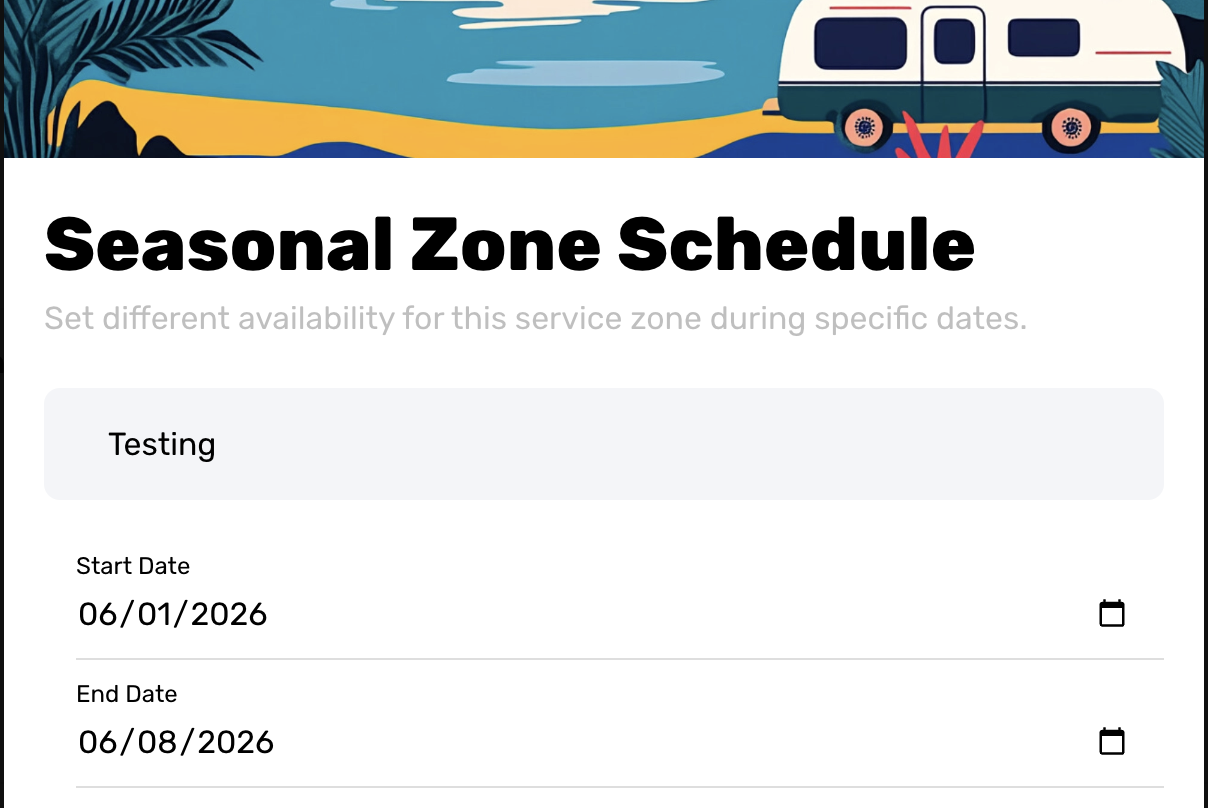
- Mobile instructors: open summer-only zones. That lake community 40 minutes out is unprofitable in October and very profitable in July when you can cluster five backyard-pool stops in one afternoon. Seasonal zone schedules let the wider map turn on and off by date.
The most important summer task isn't a summer task
It's August. Specifically: sell fall commitment in August, before families scatter. Your roster's attention peaks in mid-summer - kids are progressing, parents are watching from the pool deck, goodwill is at its annual high. That goodwill does not survive the first week of school.
In early August, every active family gets the conversation: "Here's the fall schedule - want to lock in your weekly spot before school starts?" Families who commit in August keep swimming. Families you contact in late September already rebuilt their week without you in it.
The Fall Retention Cliff
The September drop is the single most expensive event in a swim instructor's year. School restarts, soccer and dance grab the calendar, the backyard pool closes, and "we'll pick it back up soon" quietly becomes never.
Model the cliff with your own numbers: multiply lapsing families by the share you can realistically retain and the measured contribution margin of a retained family. That turns September churn into a decision metric without assuming every learn-to-swim customer has the same lifetime value.
The counter-play, in order of effectiveness:
- Convert summer families to school-year subscription plans before Labor Day. A recurring monthly plan ("4 lessons a month, Wednesdays at 4:30") changes the default from re-decide every week to continue until you cancel. Fall survival is a default-settings problem, and plans set the default to "keep swimming."
- Sell the safety story, not the schedule. Skills regress over a swim-free winter. "Six months off undoes a summer of progress - one lesson a week holds it" is true, and it's the argument that lands with parents.
- Make the fall offer concrete and slot-specific. Not "let us know if you want to continue" - rather "I'm holding Wednesdays at 4:30 for Maya through Friday." Scarcity plus a deadline beats an open invitation every time.
- Have a makeup policy ready for the chaotic fall calendar. Fall families miss more lessons than summer families. If a missed Wednesday means lost money, families quit; if it means a makeup credit, they stay.
The Winter Playbook: Different Water, Different Customers
Winter demand is real - it's just smaller and somewhere else. The winter plays:
- Solve the water problem first. If you teach outdoors or in client pools, winter means renting indoor lane time: hotel pools, apartment and condo amenity pools, community center lanes, gym pools, and private homeowners with heated indoor pools all rent by the hour, often for $25-$75/hour during their dead daytime windows. One or two reliable lanes two evenings a week is a winter business.
- Fill off-peak hours with adult learners. Adults are winter's underrated market: no school-schedule conflict, happy to swim at 7 am or 8 pm when kid demand is zero, often working toward a spring goal (triathlon, vacation, lifelong fear). Adult learn-to-swim runs at full private rates.
- Sell mini-sessions, not open-ended commitments. January parents won't sign up for "weekly lessons forever," but they'll buy a "4-Week Water Confidence Session" with a start date, an end date, and a goal. Small packages, clearly framed, fill winter calendars that subscriptions can't.
- Run a December gift campaign. Lesson packages as holiday gifts is the easiest revenue of the trough: grandparents are actively hunting for non-toy gifts, and a giftable lesson package ("Give the gift of swimming - 5 lessons") is cash in December for lessons taught in the new year. Promote it the week after Thanksgiving.
- Use blocked dates instead of vanishing. Take your real holiday break by blocking the dates on your calendar - parents can still self-book January around it. An instructor who disappears in December restarts cold in January; one whose booking page stayed live doesn't.
The Spring Ramp: March to May Decides Your Summer
Summer revenue is mostly determined before June 1. The spring sequence:
- March - marketing into the ground game. Spring is when families decide on summer activities, and swim lessons are a local purchase: school events, farmers markets, door hangers in young-family neighborhoods, mom groups. The full tactical list is in our local marketing strategies guide - pick three and run them weekly through May.
- April - early-bird summer packages. Open summer booking with a deadline-driven offer: an early-bird discount code (10-15% off summer packages, expires April 30) converts "we'll figure out summer later" into booked revenue now. In Swum, that's a percentage discount code with an expiration date - the deadline does the selling.
- May - raise rates and re-engage the lapsed list. New-client summer rates step up - you'll be full anyway (our pricing guide covers how far to push). Then message every family from last summer: "Summer is filling - want your old Tuesday slot back?" Lapsed families are the cheapest customers you'll ever acquire.
- All spring - watch lead times. When average booking lead time crosses ~3 weeks, open the waitlist and stop discounting. Demand is doing your selling now.
Cash-Flow Smoothing: Engineering Away the Trough
Even a well-run seasonal business has a revenue curve. The goal is making the cash curve flatter than the lesson curve:
- Subscriptions are the backbone. Twenty families at $220/month is $4,400 of January revenue that exists because of decisions made in August. The deeper your plan base, the shallower your trough.
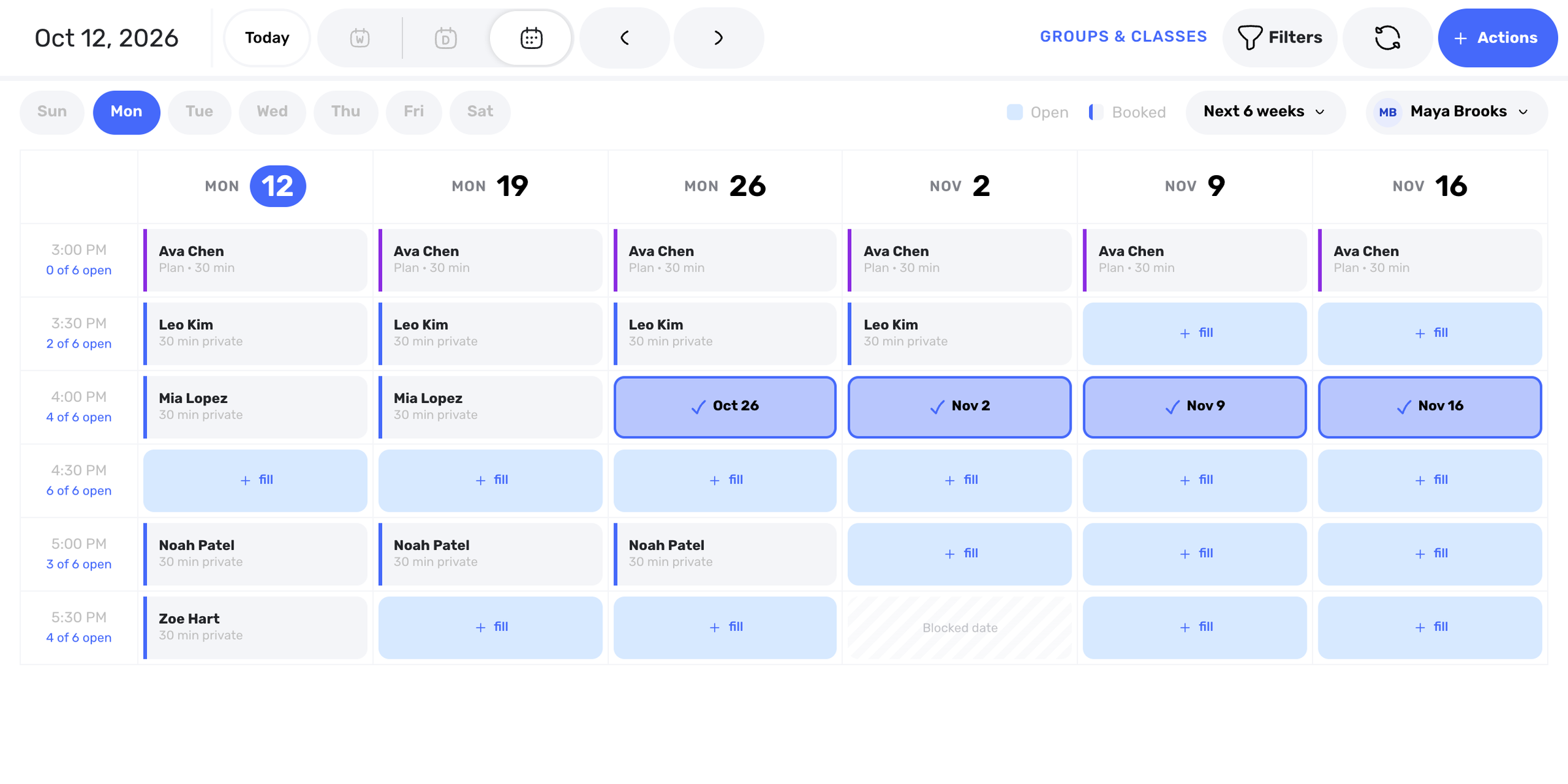
- Park & Pause instead of cancel-and-hope. The summer mirror-image problem: school-year plan families want summer off for camps and travel. If their options are full price or cancel, they cancel - and a canceled family is a brand-new sales conversation in September. Swum's Park & Pause gives a third option: a small monthly hold fee keeps their weekly spot reserved over the break. You keep revenue and the relationship; they keep Tuesday at 4:00. Pause beats cancel for everyone.
- Deposits on peak bookings pull a slice of summer cash into spring and collapse your no-show rate in the season where no-shows cost the most.
- Packages sold at peak fund the trough - an August fall-package push and a December gift push are cash collected in strong months for lessons delivered in weak ones. Just track outstanding credits honestly; prepaid cash isn't earned until the lesson is taught.
The 12-Month Calendar
| Month | The play |
|---|---|
| January | Mini-sessions launch ("New Year Water Confidence"); adult lessons push; redeem December gift packages |
| February | Quietest month - plan the year, update pricing and booking rules, confirm summer pool/lane access |
| March | Local marketing ground game begins; spring break mini-intensives |
| April | Open summer booking; early-bird discount code with April 30 deadline |
| May | New-client rates step up; re-engage last summer's lapsed list; start the waitlist when lead times stretch |
| June | Peak begins - shift mix toward semi-private/group; deposits on all new bookings |
| July | Run intensives/bootcamps; summer-only zones earning; capture skill-milestone reviews and referrals |
| August | The big one: sell fall plans and packages to every active family before Labor Day |
| September | Convert the stragglers week one; makeup-friendly policies absorb fall chaos; school-year zones/schedule take effect |
| October | Adult lesson push #2; confirm winter water access |
| November | Build the holiday gift package; promote starting the week after Thanksgiving |
| December | Gift package sales; block holiday dates but keep booking live for January |
FAQ
How much does swim lesson demand drop in winter?
Your historical monthly bookings should set the planning curve. Indoor-pool and warm-climate markets may be flatter, while outdoor-pool markets may fall sharply after summer; compare at least two seasons before treating a month-to-month change as a durable pattern.
How do swim instructors make money in the winter?
The main winter plays are renting indoor lane time (hotel, gym, and community pools often rent for $25-$75/hour off-peak), teaching adult learners in early-morning and evening slots, selling short goal-based mini-sessions instead of open-ended lessons, and running a December gift-package campaign.
How do I keep swim families from quitting in September?
Convert them before Labor Day, not after. Offer a school-year subscription plan with a held weekly spot in early August while engagement is high, lead with skill regression ("a winter off undoes a summer of progress"), and make the offer slot-specific with a deadline.
When should I open summer swim lesson bookings?
Open summer booking in April with an early-bird incentive that expires by May 1. In most markets summer slots fill 4-8 weeks ahead at peak, so April booking captures families while they're planning summer - and gives you deposit cash in spring.
What is Park and Pause for swim lessons?
Park & Pause is a Swum subscription feature that lets a family pay a small monthly hold fee to keep their reserved weekly lesson spot during a break - typically summer - instead of canceling the plan. The instructor keeps some revenue and the relationship; the family keeps their slot for the return.
Should I lower my swim lesson prices in winter?
Generally no - cutting rates rarely creates winter demand, it just discounts the families who would have come anyway. Repackage instead: shorter goal-based sessions, adult offerings, and gift packages move winter revenue without resetting your price anchor for summer.
Build the calendar once and every season sells the next one. Create your free Swum account to set up plans, Park & Pause, seasonal zones, and gift-ready packages - or see the full toolkit on the features page.