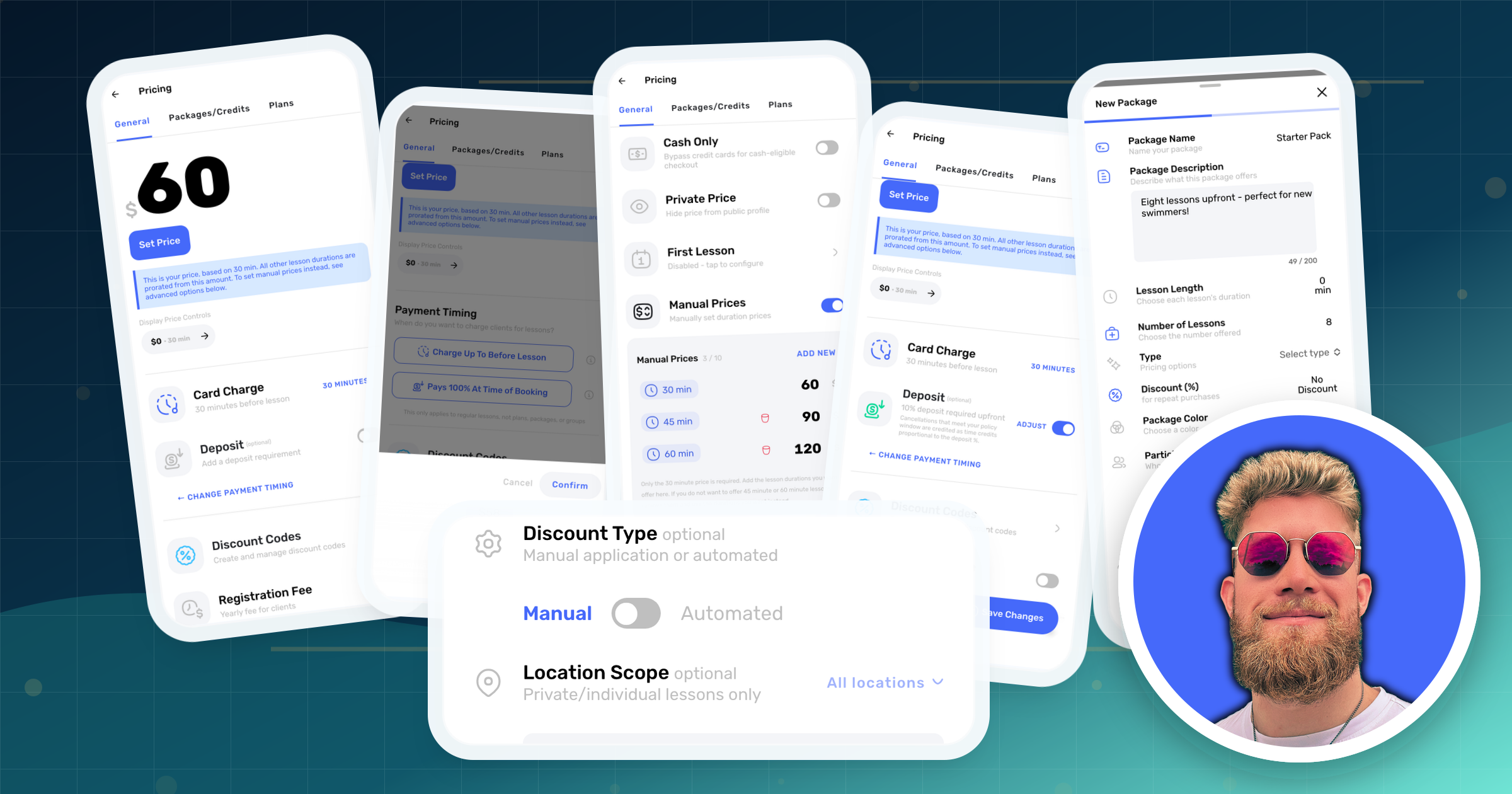
Most pricing data spreads out. This number gathered in a surprisingly tight band.
Across 1,805 successful individual orders explicitly recorded in USD on Swum, the 25th percentile was $53.86, the median was $61.20 and the 75th percentile was $63.00. In other words, the middle half of recorded order values fit inside a range of just $9.14.
That does not make $60 the correct price. It makes the cluster worth understanding.
Read the number before using it
The measured object is an order value, not a national advertised rate. An order can reflect duration, participant count, discounts, deposits, fees or other checkout rules. The sample includes only transactions with an explicit USD currency code and comes from 26 provider accounts on one platform.
Those limitations are not footnotes to hide. They determine what the number can do.
It can anchor an operator's investigation. It cannot finish it.
| Individual USD order benchmark | Value |
|---|---|
| 25th percentile | $53.86 |
| Median | $61.20 |
| 75th percentile | $63.00 |
| Eligible orders | 1,805 |
Why prices cluster
Round numbers are easy to explain, remember and compare. A $60 anchor also divides cleanly across common durations: $30 for 15 minutes, $40 for 20, $60 for 30 and $120 as a 30-minute hourly equivalent.
But operational convergence can matter more than psychology. Private instructors often face similar constraints: one instructor, one block of pool time, one family relationship, card processing, setup and possibly travel. Even across different cities, the shape of the work pulls pricing toward recognizable anchors.
The cluster may also reflect Swum's provider mix and configured defaults. Observational platform data captures behavior inside a product; it never floats free of that product.
The dangerous conclusion
The wrong response is: “The market price is $61.20, so I should charge $61.20.”
A sustainable price must absorb:
- instruction time;
- preparation and communication;
- pool rental or access;
- travel and dead time;
- staff compensation;
- payment and software costs;
- cancellation exposure;
- insurance, equipment and taxes;
- the margin required to stay in business.
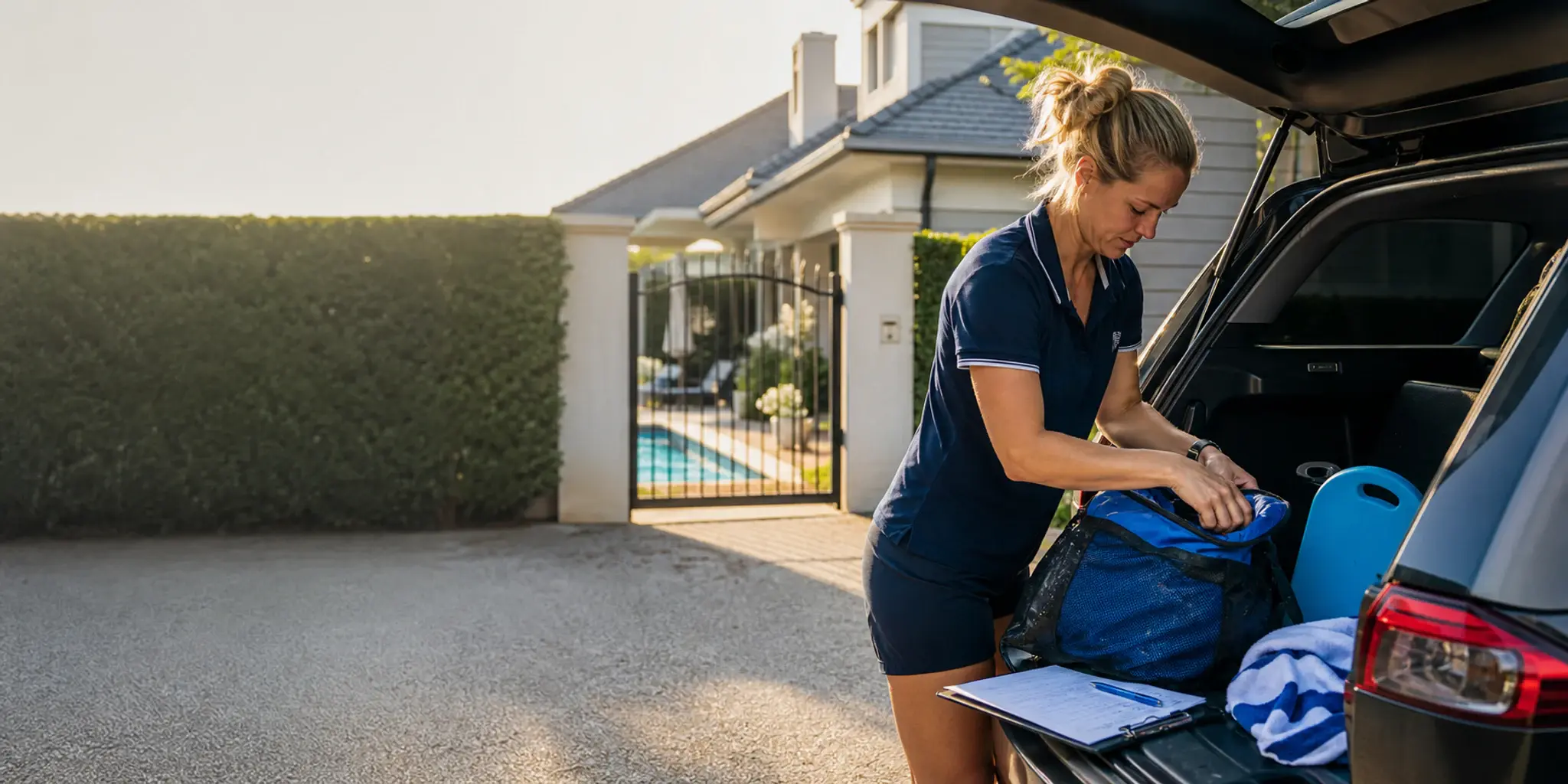
Two instructors can both charge $60 and operate entirely different businesses. One teaches back-to-back at a facility. The other drives 25 minutes between homes. Their sticker price matches; their economics do not.
A better way to use the benchmark
Start with three columns: local alternatives, your required economics and observed conversion.
Use the Swum quartiles as a reasonableness check. Then search nearby private offerings, not only recreation-center group classes. Calculate the minimum contribution you need per bookable hour. Publish a price, watch completed bookings and waitlist pressure, and revise deliberately.
The benchmark is most useful when it provokes better questions:
- Is a 30-minute order being compared with another 30-minute order?
- Is travel included?
- Is this price per swimmer or per family?
- Does a package discount improve commitment without damaging margin?
- Is the calendar full because the product is excellent—or because it is underpriced?
The real lesson in $61.20
The median is memorable. The narrow middle band is more important.
It suggests that many completed individual transactions found familiar ground near $60. Operators should not copy that number blindly. They should understand exactly why their own price belongs below, inside or above it.
FAQ
What was the median private swim lesson order value?
The median among 1,805 eligible individual USD orders on Swum was $61.20.
Does that mean a private lesson costs about $60 nationally?
No. This is a first-party platform order benchmark, not a national posted-rate survey, and it is not normalized for duration, geography or checkout adjustments.
How should an instructor choose a price?
Combine local competitor research, required contribution per bookable hour, travel and facility costs, experience, format and actual conversion data.
See the full pricing benchmark and the practical 2026 pricing guide.