At 3:58 PM, a 4 PM lesson is still inventory.
At 4:01 PM, it is gone forever.
That is what makes late cancellation different from ordinary churn. A family that leaves next month creates a future vacancy. A family that cancels two hours before a lesson creates a perishable one.
Across 4,030 Swum cancellation records with usable notice, 30.6% arrived within 24 hours of the scheduled start and 8.5% arrived within two hours. Because both percentages use the same denominator, the final two hours account for roughly 28% of the measured cancellations that occurred inside 24 hours.
The problem is not merely cancellation. It is how little recovery runway remains.
A policy cannot refill a lane
Cancellation policies usually begin with fairness: when should a family receive a refund, credit or makeup? That matters. But the operational question comes first: can the slot still be sold or reassigned?
Inside two hours, the answer is often no. A waitlisted family may not have a suit packed. An instructor may already be traveling. A pool lane remains rented whether a swimmer enters it or not.
This is why a policy should distinguish notice windows instead of treating every cancellation alike.
| Notice window | Operational reality |
|---|---|
| More than several days | Time to offer, reschedule or reorganize |
| 24 hours to several days | Recoverable with an active waitlist |
| Two to 24 hours | Recovery requires fast matching and messaging |
| Under two hours | Slot is frequently unrecoverable |
Build the recovery system before writing the penalty
A strict fee without a recovery workflow protects some revenue but wastes demand. A generous policy without boundaries can make the schedule economically unstable. The durable approach combines three pieces.
1. A clear clock
Define when notice is measured and show the rule before purchase. “24 hours” should not become a debate about business days, text-message timestamps or whether the instructor saw the message.
2. A live replacement path
Tag waitlisted families by level, format and availability. When a viable slot opens, send a specific offer with a short deadline and a direct booking link. Generic announcements are too slow for perishable inventory.
3. A humane exception process
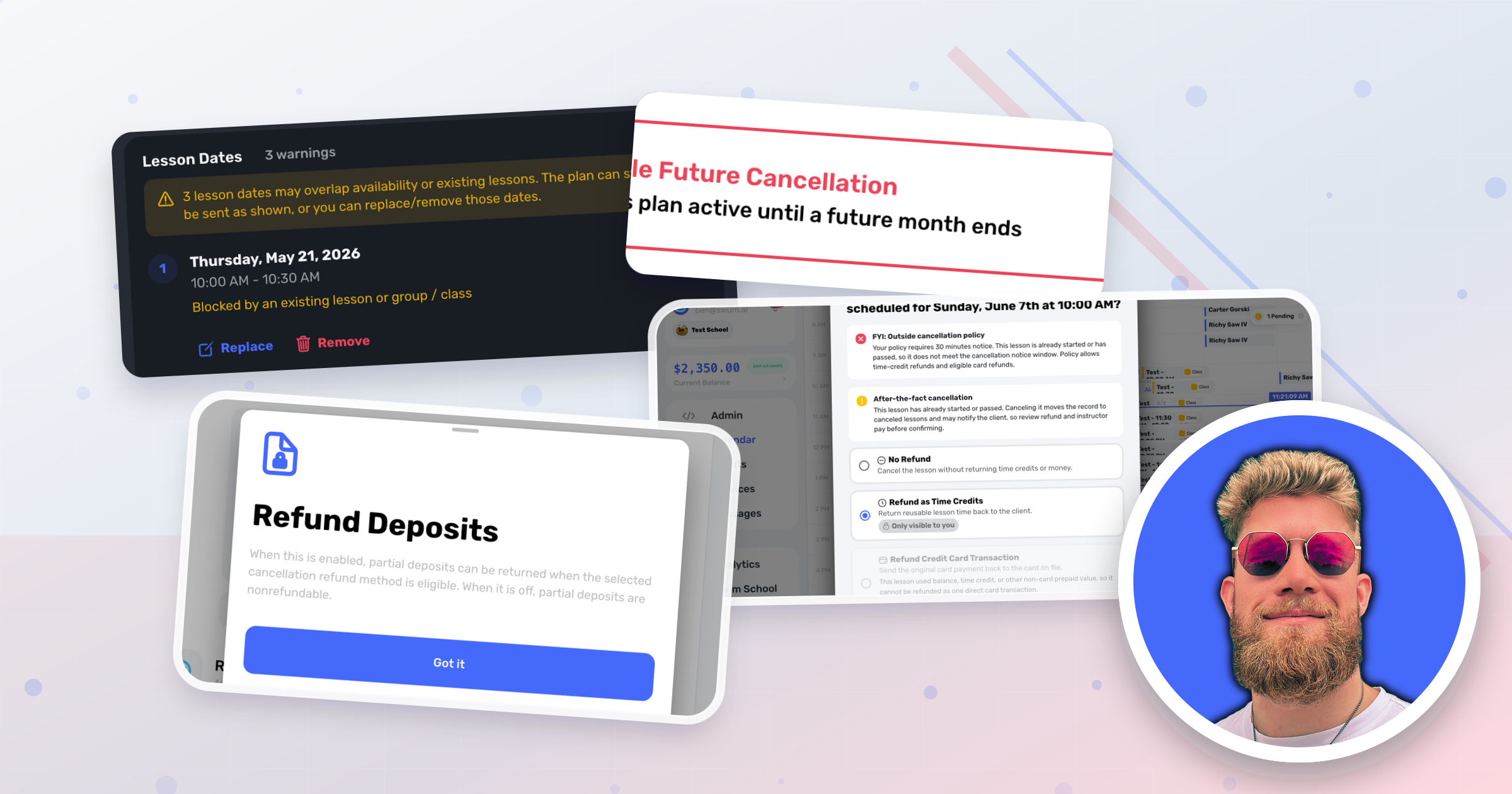
Weather, illness, pool closure and instructor emergencies do not fit neatly into one rule. Give staff authority to grant a refund, time credit or reschedule, but record the choice consistently enough to measure it later.
Measure recovery, not toughness
The most useful cancellation dashboard is not “fees collected.” It includes:
- share canceled inside each notice window;
- percentage refilled before start;
- time from cancellation to replacement;
- refund, credit and reschedule outcomes;
- repeat booking after the event;
- patterns by location, time and lesson format.
A policy is working when it protects capacity and keeps reasonable families in the relationship.
What the data does not say
These records do not provide a cancellation rate because the correct denominator requires a deduplicated booking-level outcome model. They do not prove lost revenue, no-show behavior or customer blame. Some cancellations were provider-initiated, some were rescheduled, and some may have been recovered through workflows not represented by one field.
The finding is narrower and still useful: late-cancellation exposure is concentrated enough to deserve a designed system.
FAQ
How common are last-minute swim lesson cancellations?
In this Swum timing sample, 30.6% of cancellation records occurred within 24 hours and 8.5% within two hours of the scheduled start.
What is a reasonable swim lesson cancellation window?
There is no universal answer. Operators should consider whether a slot can realistically be refilled, then state the notice clock, remedy and exception process clearly.
Should every late cancellation lose payment?
Not necessarily. The appropriate outcome may be no credit, a time credit, a reschedule or a refund depending on policy, cause and local requirements. Consistency and clarity matter more than performative strictness.
Use the full cancellation study alongside the practical cancellation and no-show policy guide.