You spent real money and real effort getting that family in the water. Door hangers, school events, a free trial lesson, the works. Then eight weeks in, they quietly stop booking - and you're back at the top of the funnel, paying to replace them.
That's the part most swim businesses get backwards. They obsess over new enrollments and treat dropouts as weather: unfortunate, unpredictable, nobody's fault.
Retention is not weather. Families quit for a short list of specific, fixable reasons - and almost all of them send warning signs weeks before they leave. This guide covers the real cost of churn, the six reasons families actually quit, the fix for each one, and the leading indicators that let you act before the goodbye email.
The Real Cost of Losing a Family
The math on churn is brutal because you pay it twice: once in lost future revenue, and again in acquisition cost to backfill the spot.
The average learn-to-swim customer is worth at least $1,000 in business. A weekly $60 lesson is $240 a month - and learn-to-swim families who stay typically stay for multiple seasons, add siblings, and refer their friends. A family that quits in week 8 instead of month 18 didn't cost you one booking. It cost you most of that lifetime value.
Meanwhile, replacing them costs marketing dollars, trial discounts, and onboarding time - and the replacement family starts at zero trust, which is exactly when churn risk is highest. Keeping a family is almost always cheaper than finding a new one, which is why the best local marketing strategy is the one you run on families you already have.
The retention math
Here's what a 5-point retention improvement does for a modest swim business with 60 active families, $240/month average revenue per family, and typical month-over-month churn:
| 8% monthly churn | 3% monthly churn | |
|---|---|---|
| Families lost per month | ~5 | ~2 |
| Average customer lifespan | ~12.5 months | ~33 months |
| Lifetime value per family | ~$3,000 | ~$8,000 |
| Annual revenue lost to churn | ~$14,400 | ~$5,200 |
| New families needed just to stay flat | ~58/year | ~22/year |
Same pool, same rates, same instructors. The 3%-churn business earns dramatically more per family and needs less than half the marketing effort just to hold steady. Every tactic below is in service of moving that one number.
The 6 Real Reasons Families Quit
Parents rarely tell you the real reason. The cancellation email says "schedule conflict" or "taking a break." Underneath, it's almost always one of these six.
1. They can't see progress
This is the number one killer, and it's a perception problem more than a teaching problem. You can see that a kid's kick improved and their breath control doubled. The parent watching from a lounge chair sees the same drills as last month and starts doing the math on $240.
The kid is progressing. The parent's evidence of progress is flat. That gap is where churn lives.
The fix: make progress visible on a schedule, not on request. Send a short skills update every 2-4 weeks - what the swimmer mastered, what's next, one specific moment from a recent lesson ("she put her face in without being asked today"). It takes two minutes and it reframes every lesson from "another $60" to "step 7 of a visible plan."
If you're tracking skills in a system, this gets close to free. Swum's progress tracking lets you log skills during the lesson and makes updates visible to parents, so the evidence builds itself.
2. Scheduling friction wears them down
Every rescheduling hassle is a small withdrawal from the family's patience account. The text-message back-and-forth to move a lesson. The missed lesson that just evaporates with nothing in return. The third week of "can we do Thursday instead?" with no easy answer.
No single incident makes a family quit. The accumulation does - because somewhere around the fourth hassle, swim lessons get mentally recategorized from "thing we do" to "thing we manage."
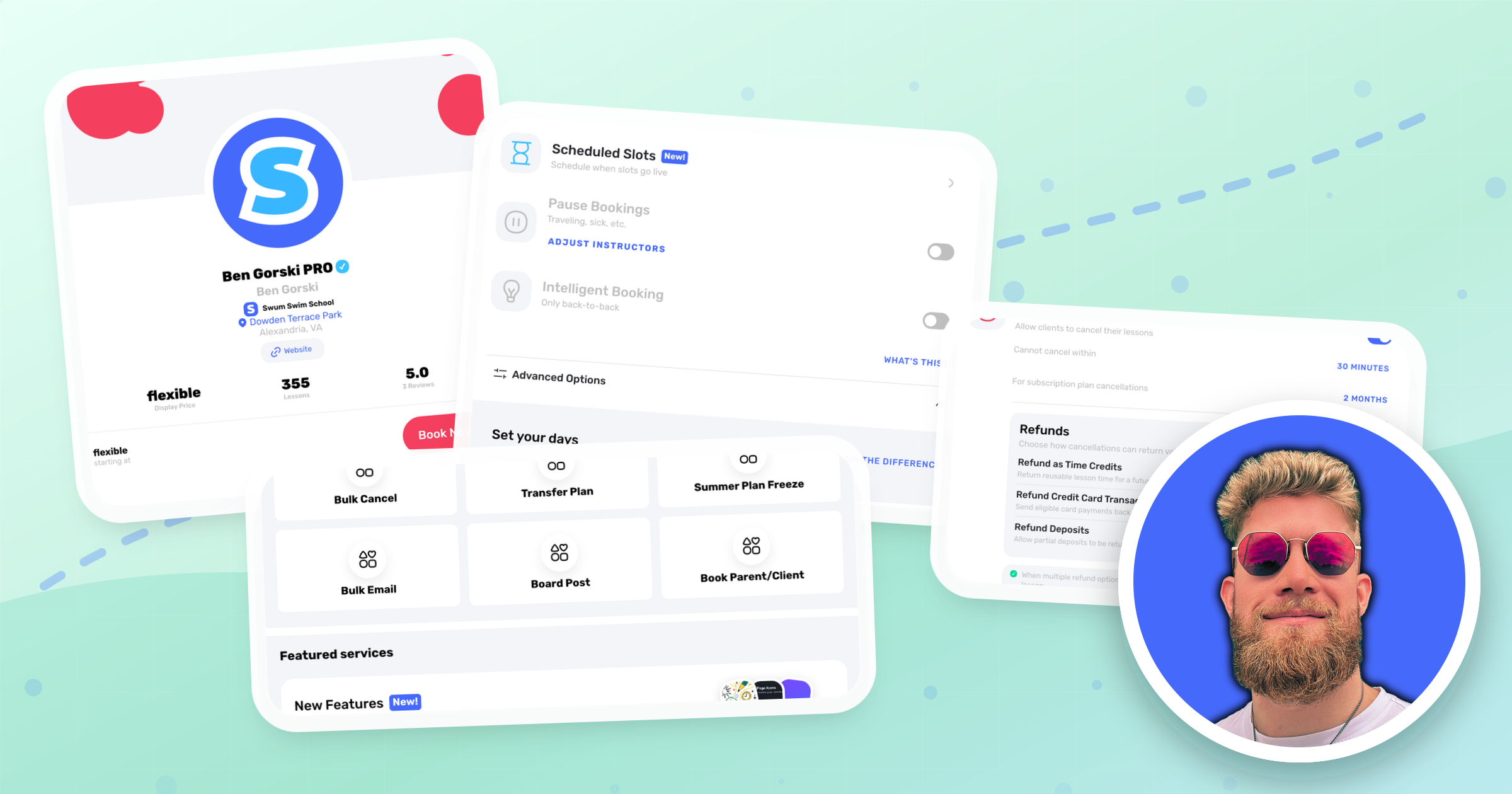
The fix: make rescheduling self-service and make missed lessons recoverable. A clear makeup lesson system - missed lessons become credits, credits book into open slots, done - removes the single biggest source of friction. Parent self-service scheduling removes the rest. The families who reschedule easily are the families who stay.
3. The seasonal break becomes permanent
A family pauses for summer vacation, the holidays, or soccer season, fully intending to come back. Then their slot gets filled, the routine breaks, and re-enrolling becomes a decision instead of a default. Most "pauses" that don't have a return date never end.
The fix: never let a pause be open-ended. Two tools work here:
- A paid hold. Let families pay a small fee to keep their weekly slot through the break. Swum calls this Park & Pause on subscription plans - the family keeps their spot, you keep revenue flowing through the slow season, and "coming back" requires zero decisions because they never fully left.
- A booked return date. If a family won't hold the slot, book their first lesson back before they leave. "See you August 12th at 4pm" survives a summer. "Reach out when you're back" doesn't.
4. Money doubt: "is this still worth it?"
This is the value question, and it gets asked silently at every billing cycle. Note that it's rarely a pure affordability problem - families find money for things that feel essential. It's a value perception problem, which means it's really reason #1 (invisible progress) wearing a different hat.
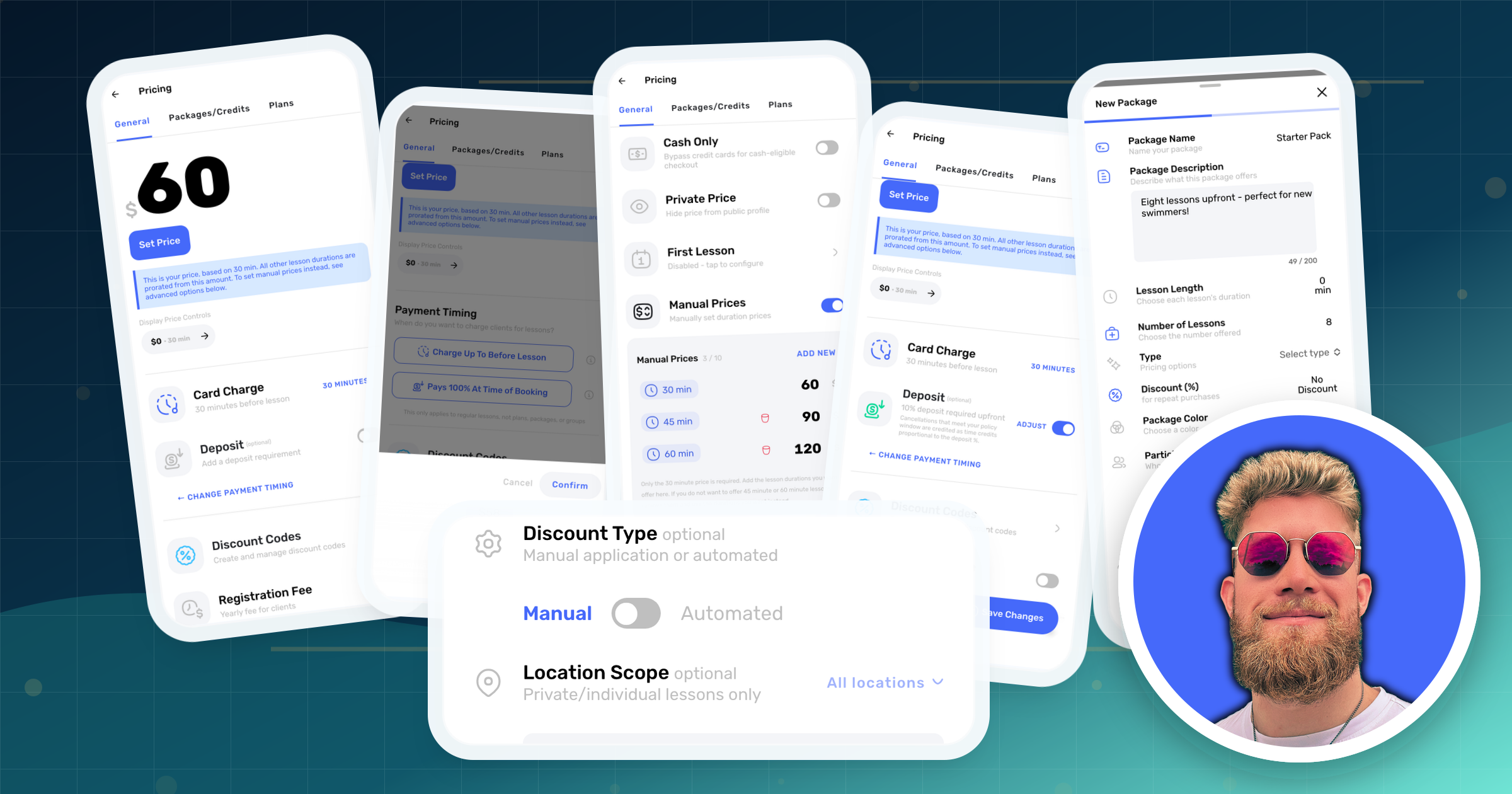
The fix: structure pricing so continuing is the default, and keep feeding the value side of the ledger. Single drop-in lessons force a buying decision every single week - 52 chances a year to quit. Packages and subscription plans flip that: the default is continue, and quitting requires an action. That's not a trick; it's the same reason gym memberships, not day passes, build durable businesses. (More on structuring this in our 2026 pricing guide.)
5. Fear or one bad lesson experience
A scary moment in the water, a forced submersion, a lesson that ended in tears - for an anxious kid, one bad experience can undo months of trust, and the parent often pulls the plug to protect the child.
The fix is mostly prevention: train instructors to work with fear instead of pushing through it. We wrote a full breakdown of the science behind water anxiety and how to coach through it - the short version is that gradual exposure with the child in control beats "they'll get over it" every time.
When a bad lesson does happen, call the parent that day. Not text - call. Acknowledge it, explain the plan for next week, and offer the next lesson with a different approach. Families forgive a bad lesson. They don't forgive feeling like nobody noticed.
6. Life logistics win
New baby, new job, moved across town, school schedule changed. Some churn is genuinely out of your hands - but less than you think. A family whose Tuesday 4pm stopped working doesn't have to quit; they have to not find an alternative. If finding a new slot means a phone-tag negotiation, they quit. If it means two taps in a booking app, they move to Thursday.
The fix: make staying easier than leaving. Visible open availability, self-service rebooking, and a quick "we have Thursday 4:15 or Saturday 9am - want either?" message the moment you hear about a conflict.
The First 8 Weeks Decide Everything
Churn isn't evenly distributed. The riskiest window is the first two months, before the routine is set and before the parent has seen real progress. Treat new families differently:
- Week 1: Send a welcome message after the first lesson with one specific positive observation about their swimmer.
- Week 2-3: Share the swimmer's starting skill assessment and what the next milestone is - now the parent has a roadmap.
- Week 4-6: First progress update. Even tiny wins count; the point is establishing the rhythm of visible progress.
- Week 6-8: Offer the upgrade from drop-ins to a package or plan, anchored to the roadmap ("she'll likely hit independent floating within this next 8-pack").
A family that makes it past week 8 with a package on file and a progress update in their inbox is a fundamentally different retention risk than one who's been silently swiping a card weekly.
Leading Indicators: Catch the Quit Before It Happens
Almost nobody quits cold. The signals show up first, in your own data:
| Signal | What it usually means | Your move |
|---|---|---|
| Package balance running low, no repurchase | Family is deciding whether to continue | Send a progress update + renewal nudge before the last credit |
| Subscription plan approaching its end date | "Should we keep going?" conversation is happening at home | Reach out with next-milestone framing, not a generic renewal |
| Attendance gap of 2+ weeks | The routine is breaking | Personal check-in and an easy rebook offer |
| Increased rescheduling activity | Their slot no longer fits their life | Proactively offer a standing-slot change |
| Open slots appearing in a previously full schedule | Churn already happening upstream | Audit who left and why this month |
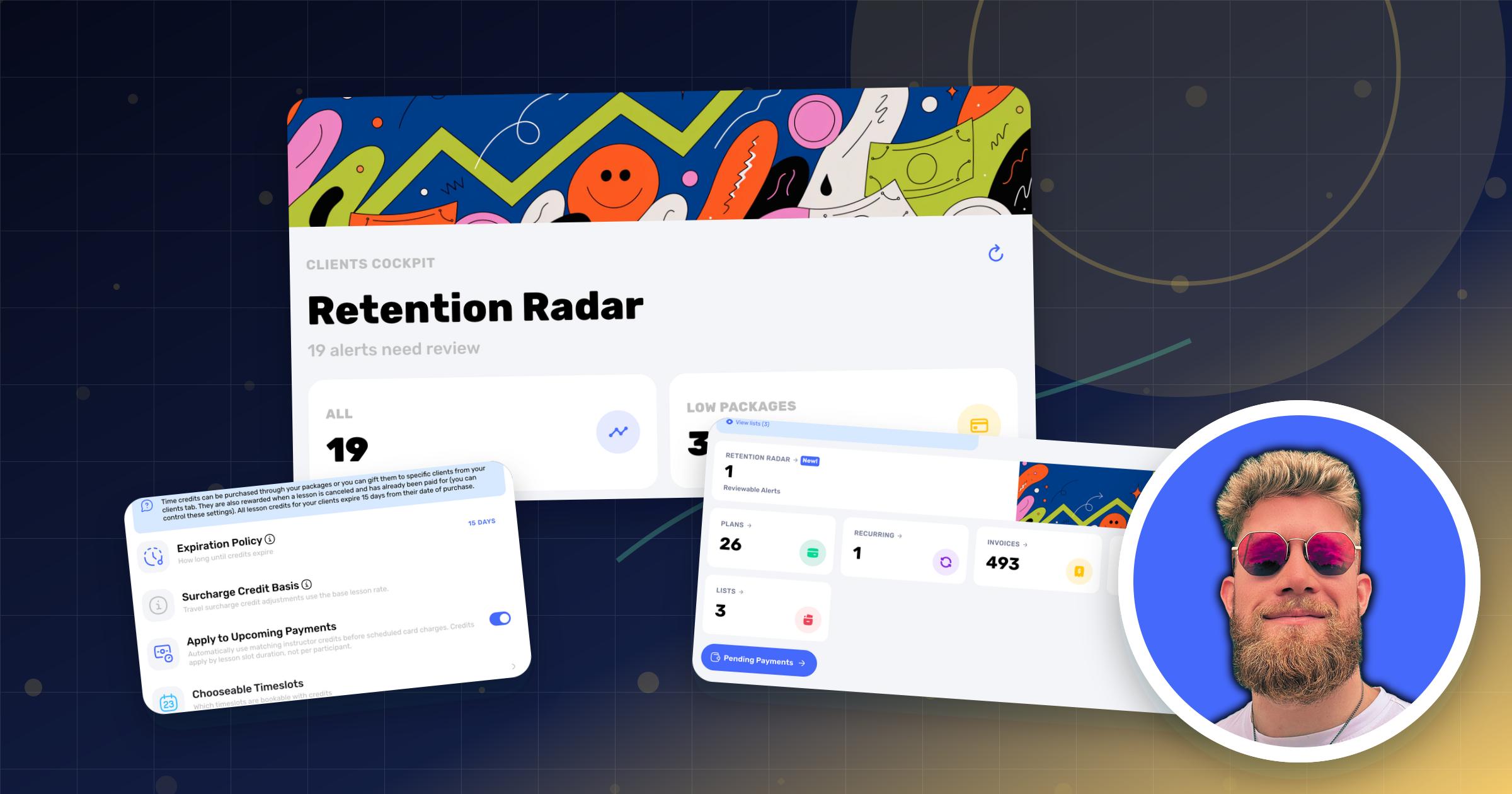
The problem with these signals is that they hide in different places - payment history, booking calendars, message threads - and nobody has time to cross-reference all of it weekly. This is exactly what Swum's Retention Radar does: it surfaces low package balances, ending plans, and open schedule slots on one dashboard, so the at-risk families come to you instead of disappearing quietly.
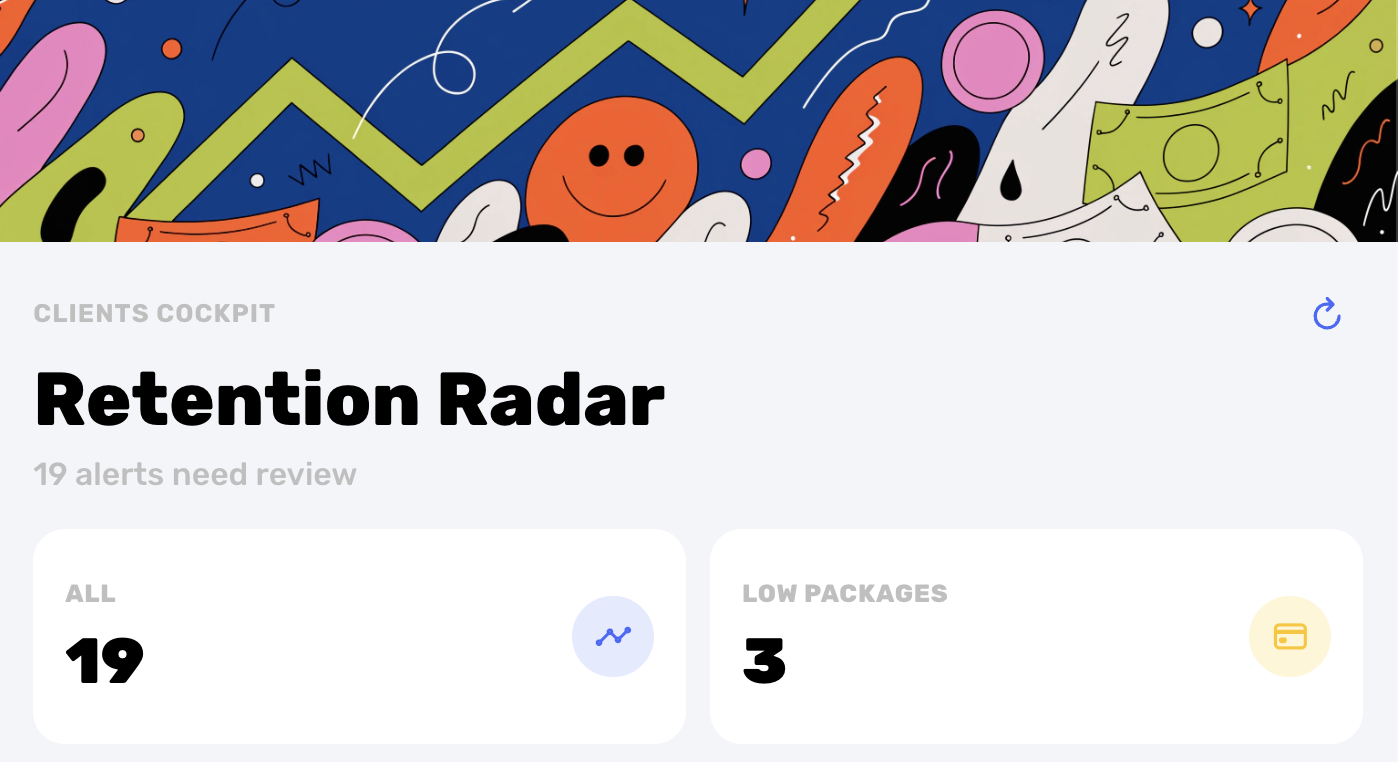
Whether you use software or a spreadsheet, the principle is the same: review the leading indicators weekly, because by the time a family tells you they're leaving, they decided two weeks ago.
A Simple Monthly Retention Routine
You don't need a complicated program. You need a 45-minute monthly habit:
- Pull your numbers (10 min). Active families this month vs. last. Who left? Tag each departure with one of the six reasons above - honestly. Your analytics should make this a glance, not a project.
- Work the at-risk list (15 min). Low balances, ending plans, attendance gaps. Send each one a personal message - progress update first, renewal ask second.
- Send progress updates (15 min). Every active family gets visible progress at least monthly. Batch it.
- Fix one friction point (5 min). One thing, every month: enable makeup credits, add a paid-hold option before summer, open a Saturday slot for the family that keeps rescheduling Tuesdays.
Do this every month and you'll feel slightly underwhelmed by how unremarkable it is - right up until you compare your enrollment numbers to last year's.
FAQ
What is a good retention rate for a swim school?
Strong swim schools keep monthly churn under 3-5%, which means a typical family stays 18 months or longer. If you're losing 8-10% of families a month, you're replacing your entire customer base roughly every year - and most of that churn is fixable.
Why do kids quit swim lessons?
The most common reasons are perceived lack of progress, scheduling friction, seasonal breaks that become permanent, doubts about value for money, a frightening lesson experience, and life logistics like moves or schedule changes. Most departures involve a fixable business problem, not a child who genuinely stopped needing lessons.
How do I keep swim families enrolled over the summer?
Don't let breaks be open-ended. Offer a paid hold that reserves the family's weekly slot through the break, or book their specific return date before they leave. Families with a held slot or a booked return date come back; families told to "reach out when you're ready" usually don't.
Do lesson packages improve retention?
Yes. Packages and subscription plans change the default from "decide to rebook every week" to "continue unless you act," which removes 52 small quit opportunities a year. Pair them with regular progress updates so renewal feels like the obvious next step.
What are the early warning signs a family is about to quit?
Watch for low package balances with no repurchase, subscription plans nearing their end date, attendance gaps of two weeks or more, and a spike in rescheduling. These signals typically appear two to four weeks before a family actually leaves, which is your window to intervene.
How often should I send progress updates to swim parents?
Every two to four weeks. A short note covering what the swimmer mastered, what's next, and one specific moment from a recent lesson is enough - the goal is making progress visible on a schedule so parents never have to wonder what they're paying for.
Want the warning signs to find you instead of the other way around? Create your free Swum account and get Retention Radar, progress tracking, and parent self-booking in one place - or see everything included on the features page.