You can start a private swim lesson business for under $1,000 and be teaching paying clients within 60 days. Most instructors who do it earn more per hour than they ever did teaching at a facility - often 2-4x more.
But the instructors who fail almost never fail at teaching. They fail at the business layer: no insurance, no reliable water, no booking system, no way to get past their first three clients.
This guide walks through all seven steps in order, with real costs and a first-90-days checklist at the end.
Step 1: Get Certified (CPR, Lifeguarding, and a Teaching Cert)
You don't legally need a license to teach swimming in most US states. But three credentials are effectively mandatory anyway, because insurers, pool facilities, and parents all ask about them:
- CPR/First Aid certification. Non-negotiable. You're responsible for children in water. Roughly $40-$120 and a few hours of your time.
- Lifeguard certification. Many rented facilities require it before they'll let you teach on their deck, and it materially lowers your insurance risk profile. Plan on $200-$400 and 20-30 hours.
- A teaching certification - American Red Cross Water Safety Instructor (WSI) is the most recognized in the US. Expect roughly $250-$400 and a blend of online and in-water coursework.
Don't let certification become a stalling tactic. The full stack takes most people 4-8 weeks and you can run Steps 2-5 in parallel. We compare WSI, ASCA, Starfish, and the rest in our upcoming swim instructor certification guide - watch the blog for it.
Step 2: Insurance and Business Structure
This is the step new instructors skip, and it's the one that can end your business with a single incident.
Liability insurance
You need general liability insurance with aquatics coverage - a standard small-business policy that excludes swimming instruction is worthless to you. Typical cost for an individual instructor: $150-$400 per year for $1-2 million in coverage. Organizations like sports-instructor insurance programs and aquatics associations offer member rates.
If you teach in client pools, confirm your policy covers off-premises instruction. If you rent lanes, the facility will almost always require a certificate of insurance naming them as additional insured - get this sorted before you sign anything.
Sole proprietor vs. LLC
- Sole proprietorship costs nothing and requires nothing. You and the business are legally the same entity.
- An LLC costs roughly $50-$500 depending on your state (plus annual fees in some states) and separates your personal assets from business liability.
For a business built around children and water, most instructors form an LLC early. It's an afternoon of paperwork. Pair it with a free EIN from the IRS and a separate business checking account so your books stay clean from day one.
Waivers
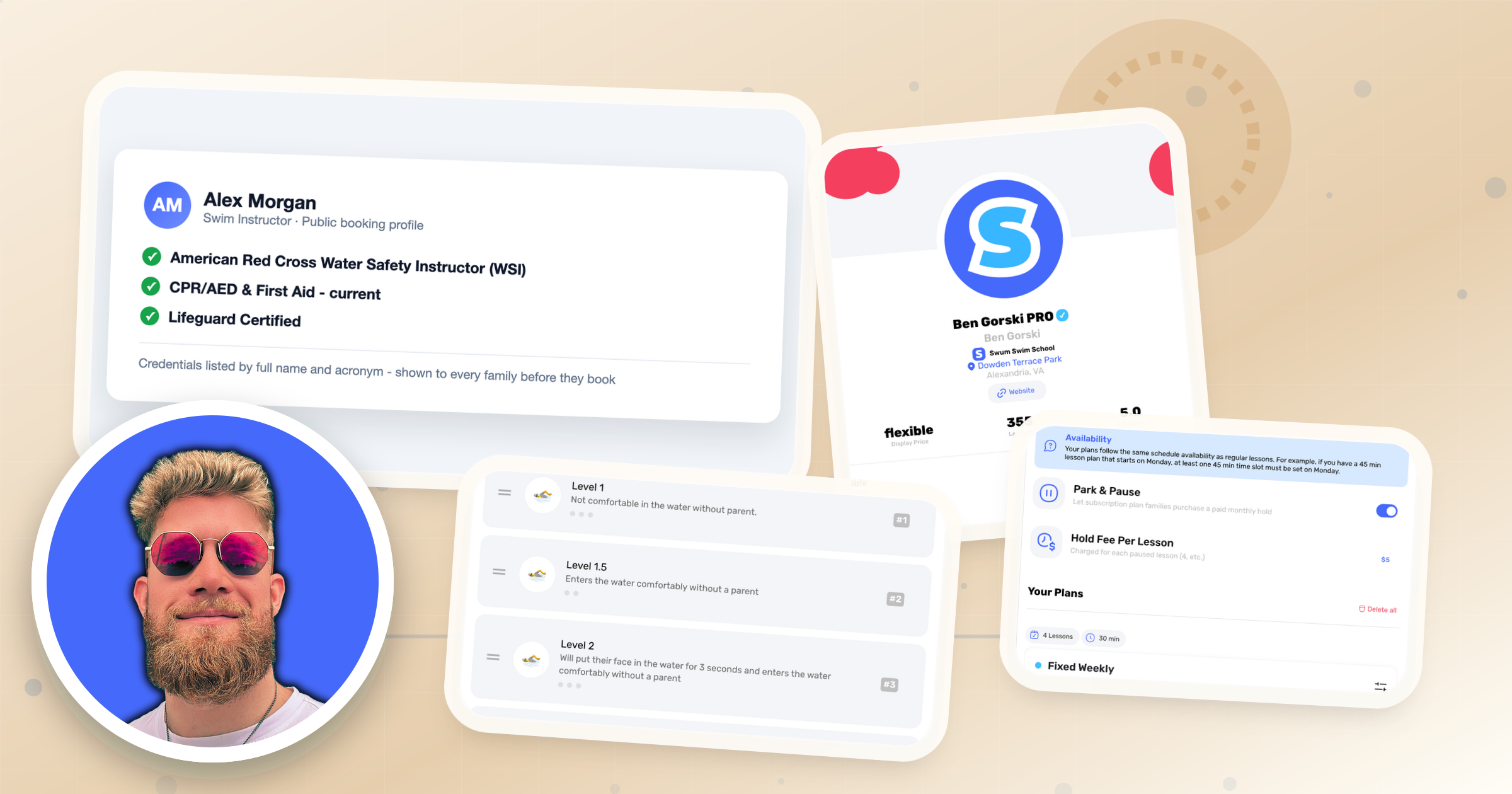
Every swimmer needs a signed liability waiver before they enter the water - including trial lessons. Paper waivers get lost and forgotten; digital waivers that block booking until they're signed remove the problem entirely.
Step 3: Secure Your Water
No pool, no business. You have three options, and many instructors mix them:
| Water Source | Typical Cost | Pros | Cons |
|---|---|---|---|
| Your own pool | $0 marginal | Total control, zero commute | Limited to homeowners; zoning/HOA rules vary |
| Client home pools (mobile) | $0 + drive time | Highest rates, no rent | Travel eats hours; seasonal in cold climates |
| Rented lanes (gyms, HOAs, hotels, schools) | $20-$60/hour per lane | Year-round indoor water, professional setting | Rent compresses margin; limited time slots |
A few notes:
- Lane rental math: at $30/hour with two 30-minute lessons in that lane, rent costs you $15 per lesson. Your rate has to absorb that. Hotels, apartment complexes, country clubs, and physical therapy pools are underrated sources - many have quiet pools and will negotiate.
- Mobile teaching is the highest-rate model (parents pay a real premium for you coming to them), but route planning becomes your second job. Service zones with surcharges and drive-time-aware scheduling are exactly what mobile swim instructor software handles.
- Check the rules before you teach in your own backyard. Some municipalities and HOAs restrict running a business from a residential pool. One phone call now beats a shutdown letter in July.
Step 4: Set Your Rates
One 2026 anchor: Swum's aggregate data found a $61.20 median recorded value across 1,805 successful, non-manual individual orders explicitly stored in USD. It is not a national posted-rate survey or necessarily a 30-minute base price, so pair the pricing benchmark with nearby competitor and cost research.
Three rules for your launch pricing:
- Benchmark against private instructors, not rec centers. A $15 group slot with eight kids per instructor is not your competitor.
- Start near the middle of your local range. You can raise rates once you're consistently booked - a full calendar is the strongest pricing signal there is.
- Price 60-minute lessons at ~1.8-2x your 30-minute rate, not exactly double. Your setup and admin time don't scale with the clock.
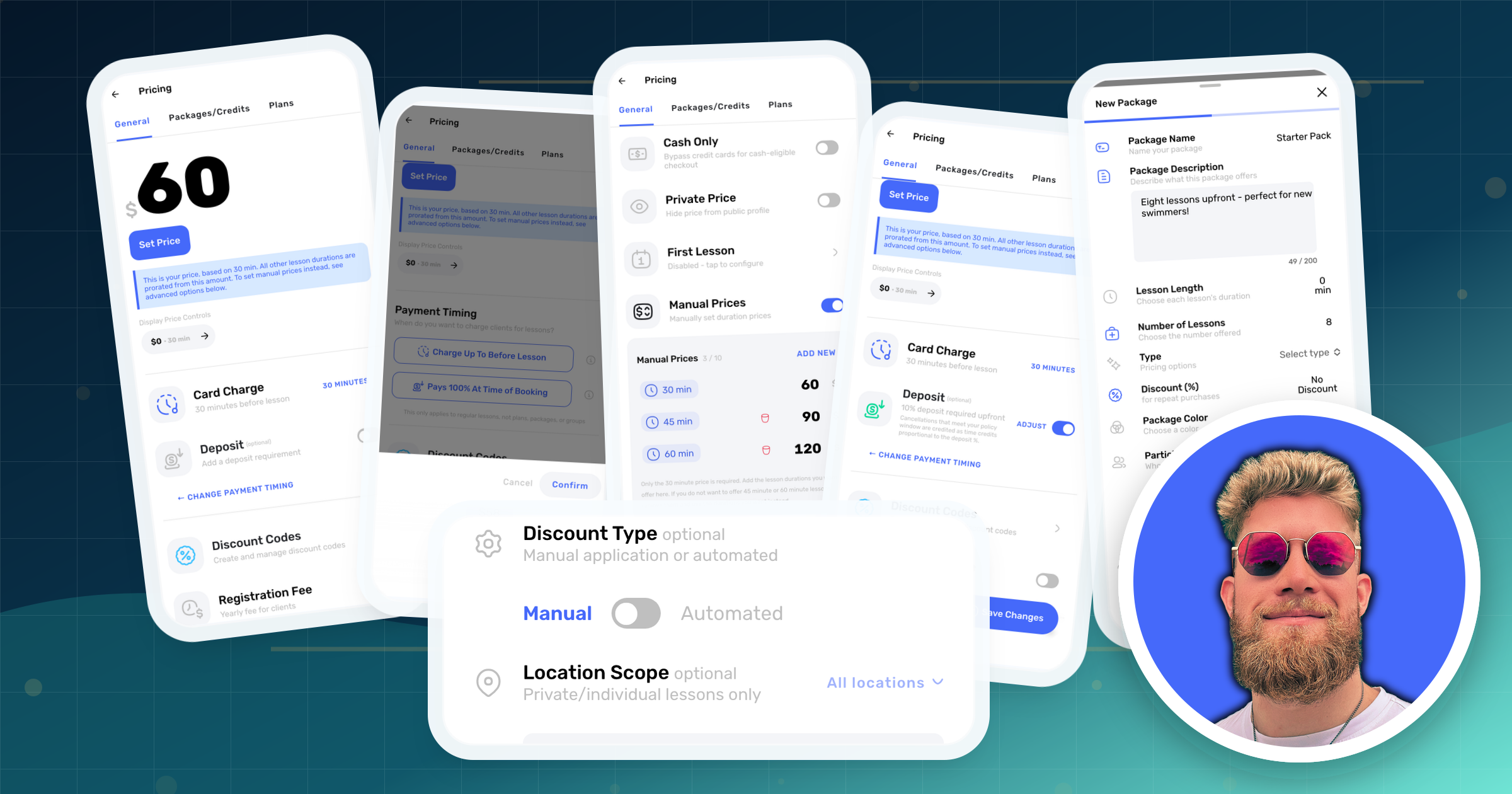
We wrote a full breakdown of rates by format, region, and experience - including package and subscription pricing - in the 2026 swim lesson pricing guide. Read it before you publish a number.
Step 5: Set Up Booking, Payments, and Waivers
This is a real step, not an afterthought. The difference between "texting back and forth with 12 parents" and "a booking page that runs itself" is the difference between a side hustle and a business.
If you are comparing platforms, use the 2026 swim lesson scheduling software ranking and buyer scorecard to test the complete parent workflow before importing your first family.
At minimum you need:
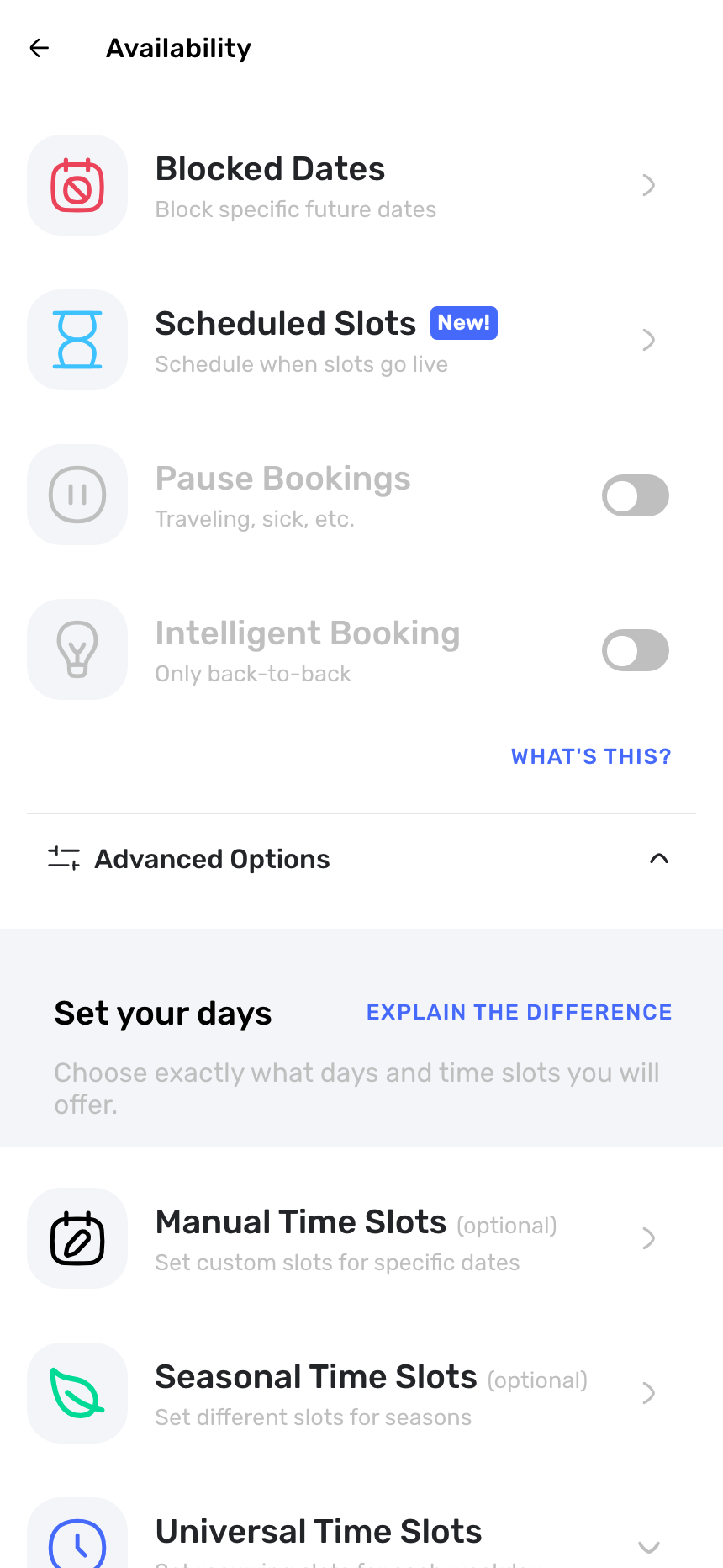
- A booking page parents can use 24/7 without texting you
- Online payments (cards plus ACH for bigger purchases like packages)
- Digital waivers required before the first lesson
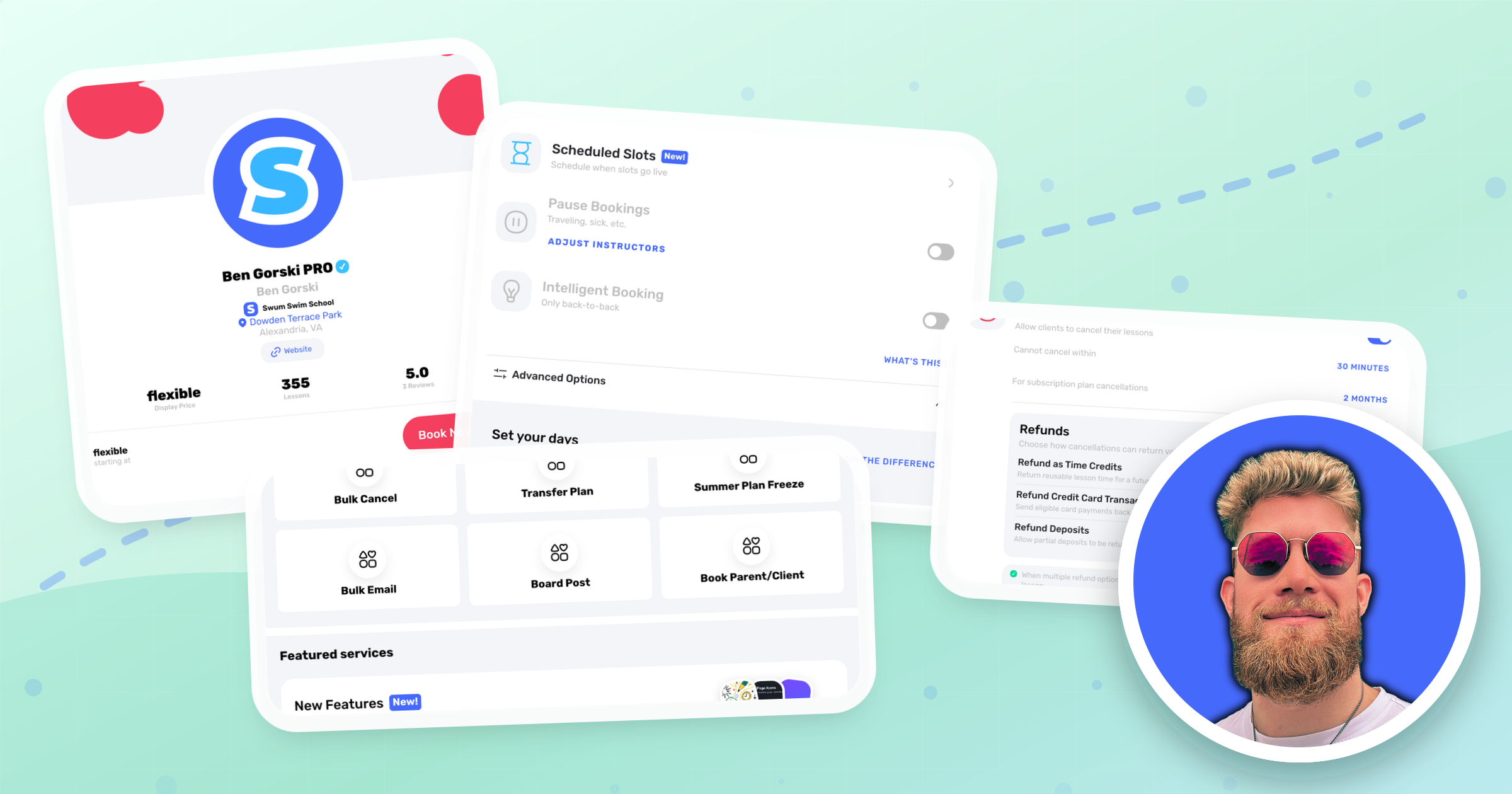
- A cancellation policy with a deposit to enforce it
You can duct-tape this together from a calendar app, a payment link, and a PDF waiver. It works until it doesn't - usually around client number eight, when double-bookings and unpaid lessons start costing you real money.
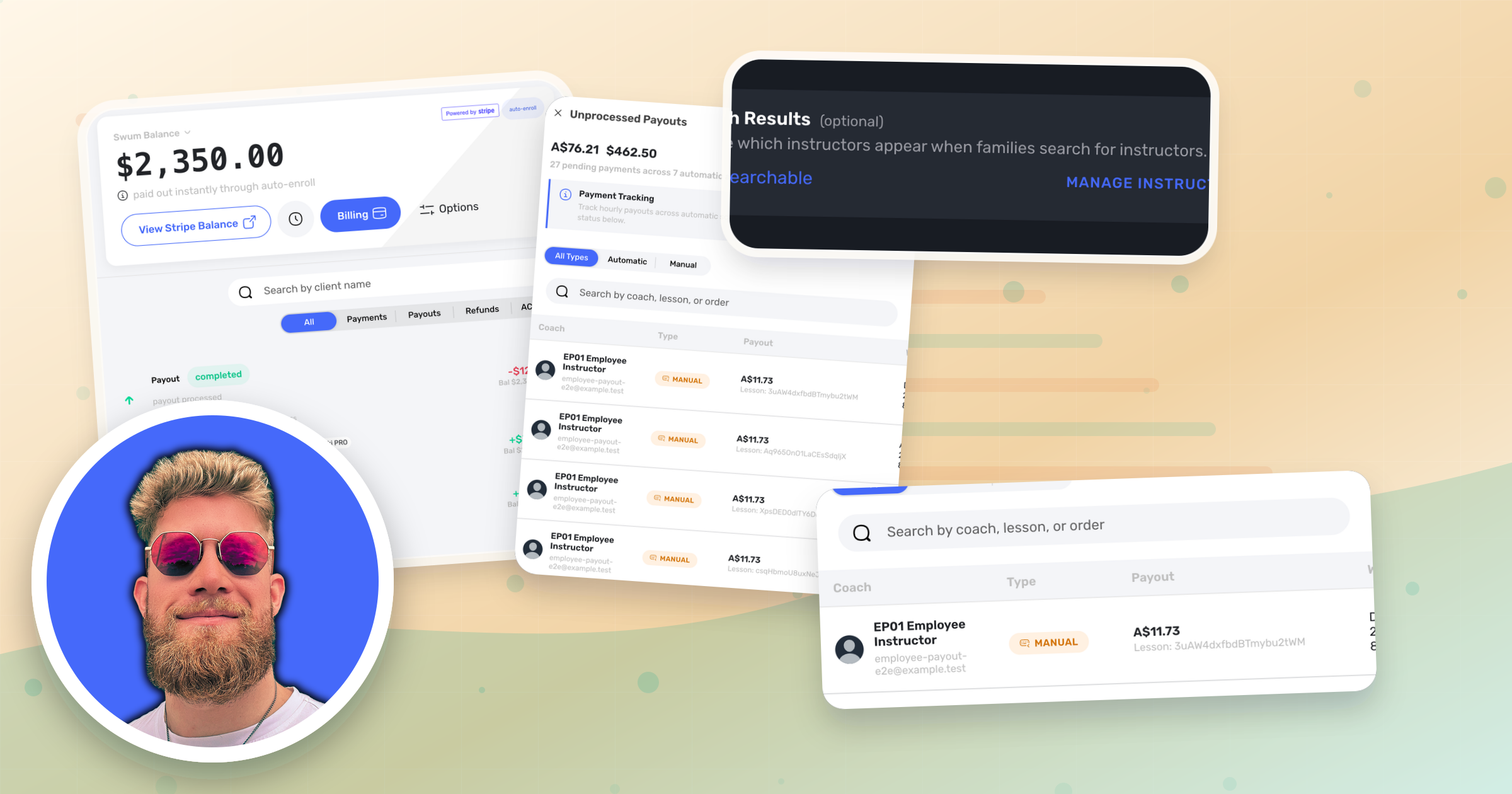
Or you can set it up purpose-built from day one. Swum's Standard plan is $0/month, which matters at this stage because you have no revenue yet: parent self-booking, scheduling, payments, digital waivers, and deposits with time-credit refunds, all live the same afternoon. When you're past roughly 9 lessons a week, the Pro plan's lower fees pay for the $98/month by themselves - a problem you'll be glad to have.
Whatever tool you choose, the rule is the same: never let "how do I pay you?" be a conversation. Every manual step you remove is a client you don't lose.
Step 6: Get Your First 10 Clients
Swim lessons are a local business - your customers live within about 25 miles of your water. That means local beats digital, especially at the start:
- Tell your warm network first. Friends, neighbors, your kids' school, your gym. Your first three clients almost always come from people who already know you.
- Join local parent Facebook groups and become the helpful water-safety person, not the advertiser. When someone asks for swim lesson recommendations, members will tag you.
- Show up where families congregate: school events, farmers markets, community fairs. A table, bright flyers, and pool toys outperform any ad you can buy at this stage.
- Launch with a first-lesson offer, not a discounted rate. A 20% first-lesson discount costs you a few dollars once; a permanently low rate costs you every week forever.
- Ask for referrals at real milestones. That is when parents have something specific to recommend. Set any referral credit below the contribution margin you actually measure from referred families, and track the code rather than assuming a universal customer value.
We covered ten of these tactics in depth, with examples from real swim school owners, in our local marketing strategies guide.
Step 7: Build Systems That Scale
Ten clients on single drop-in lessons means ten weekly sales conversations. The instructors who get to a full, predictable calendar sell commitment instead:
- Packages - prepaid bundles of lesson credits (8 lessons at an 8-15% bulk discount is the standard shape), with expiration windows so credits don't sit on your books forever. Lesson packages also make great gifts, which matters around holidays.
- Subscription plans - a recurring weekly spot billed monthly. This is the strongest model in swim instruction: predictable revenue and a default-continue relationship. Swum's Park & Pause even lets families pay a small hold fee to keep their slot over the summer instead of canceling.
- Written policies - cancellation window, makeup lesson rules, weather policy. Decide once, write it down, and let your booking system enforce it so you never argue case-by-case.
A healthy mature book of business runs roughly 60-70% plans, 20-30% packages, and ~10% singles and trials.
Startup Costs: Low, Typical, Premium
| Item | Bare Minimum | Typical | Premium Launch |
|---|---|---|---|
| CPR/First Aid | $40 | $80 | $120 |
| Lifeguard cert | $0 (skip if not required) | $250 | $400 |
| Teaching cert (WSI or similar) | $0 (start without, add later) | $300 | $400 |
| Liability insurance (year 1) | $150 | $300 | $450 |
| LLC + EIN | $0 (sole prop) | $150 | $500 |
| Teaching equipment (kickboards, barbells, toys, fins) | $50 | $150 | $400 |
| Booking/payment software | $0 (Swum Standard) | $0 | $98/mo (Pro) |
| Marketing (flyers, door hangers, booth fees) | $50 | $250 | $750 |
| Total to launch | ~$290 | ~$1,480 | ~$3,100+ |
Pool rental isn't in the table because it's an ongoing cost, not a startup one - and at typical rates ($20-$60/hour) it's covered by your first one or two lessons in each rented hour.
The takeaway: this is one of the cheapest real businesses you can start. Your scarce resource is calendar slots, not capital.
Your First 90 Days: The Checklist
Days 1-30: Foundation
- Enroll in CPR/First Aid (and lifeguard cert if your facility requires it)
- Start WSI or equivalent teaching certification
- Form LLC (or commit to sole prop), get EIN, open business checking
- Buy liability insurance with aquatics coverage
- Lock in your water source and confirm any facility requirements
- Set your rates using the pricing guide from Step 4
Days 31-60: Launch
- Publish your booking page with payments, deposits, and digital waivers
- Create a first-lesson offer for new clients
- Announce to your warm network and 3-5 local parent groups
- Print flyers/door hangers and pick one recurring community event
- Teach your first paid lessons; ask every happy parent for one referral
Days 61-90: Systemize
- Launch your first lesson package (e.g., 8-pack at ~10% off)
- Write and publish your cancellation and makeup policies
- Review which marketing channel produced actual bookings; double down on it
- Raise your sights: if you're 70%+ booked, plan your first rate increase or add semi-private slots
If you're brand new to the industry, Swum's resources for new instructors pick up where this guide leaves off.
FAQ
How much does it cost to start a swim lesson business?
Most instructors launch for $300-$1,500 covering certifications, insurance, basic equipment, and marketing. Pool rental and software can both start at $0 if you teach in client or home pools and use a free booking platform.
Do I need a certification to teach private swim lessons?
No US state requires a license to teach swimming privately, but insurers, rental facilities, and parents effectively require CPR/First Aid plus a recognized teaching certification like Red Cross WSI. Treat them as mandatory.
Do I need an LLC to teach swim lessons?
No - you can operate as a sole proprietor. But because the work involves children and water, most instructors form an LLC ($50-$500 depending on state) to separate personal assets from business liability, and carry $1-2M in general liability insurance either way.
How much can a private swim instructor make?
Independent instructors typically charge $35-$70 per 30-minute lesson ($80-$120 in major metros). At 20 lessons a week during the season, that's roughly $1,000-$2,000 a week in gross revenue before pool costs and fees.
Where can I teach if I don't own a pool?
Client home pools (mobile teaching, which commands premium rates) or rented lane time at gyms, hotels, apartment complexes, HOAs, and schools - typically $20-$60 per hour. Many instructors combine both.
How long does it take to get your first swim lesson clients?
Most new instructors book their first 3-5 clients within 2-4 weeks of launching, almost always from their warm network and local parent groups. Getting to a consistently full calendar typically takes one full season of local marketing and referrals.
Ready to make Step 5 a ten-minute job instead of a tech project? Create your free Swum account and get your booking page, payments, and waivers live today - then see everything else the platform handles on the features page.