You can sell the exact same lesson three ways: one at a time, in a prepaid bundle, or on a monthly subscription. Same pool, same instructor, same 30 minutes - and over a season, dramatically different revenue.
Here's the short version: drop-in maximizes flexibility and churn, packages maximize cash up front, and subscriptions maximize total revenue over time. The best-earning instructors run all three as a ladder, not a choice.
This is the follow-up to our 2026 pricing guide - that article tells you what number to charge; this one tells you what structure to sell it in.
The Three Models at a Glance
| Drop-In | Packages | Subscription Plans | |
|---|---|---|---|
| What the family buys | One lesson | A bundle of lesson credits | A recurring weekly spot |
| Commitment | None | Medium (prepaid) | High (auto-renews) |
| Cash timing | Per lesson | Up front | Monthly, predictable |
| Typical discount vs. drop-in | - | 8-15% | ~Package-level per lesson |
| Default behavior | Quit | Use it up, then decide | Continue |
| Your admin burden | Re-sell every week | Re-sell every 8-10 lessons | Re-sell ~never |
| Churn risk | Highest | At expiration | Card failures + life events |
That "default behavior" row is the entire game, and we'll come back to it.
Drop-In: Maximum Flexibility, Maximum Churn
Drop-in (single lessons at full price) is the right product for exactly two customers: first-timers trying you out, and genuinely irregular schedules - traveling families, adult learners, vacation visitors.
As your only model, it's brutal:
- Every week is a new sales conversation. The family has to actively decide, again, that next week's lesson is worth booking. Any friction - a busy week, a birthday party, a tight month - and the easiest decision is no decision.
- Your calendar resets to zero. You start every month with no committed revenue and no idea what you'll earn.
- You absorb all the seasonality. When September hits, drop-in families simply stop booking. Nothing holds them.
Keep drop-in on the menu at full price - it's your anchor that makes everything else look like a deal, and it's the door new families walk through. Just don't let it be the room they stay in.
Packages: Commitment and Cash Up Front
A package is a prepaid bundle of lesson credits - 5, 8, 10, 12 lessons - sold at a discount to the drop-in rate. The US norm for that discount is 8-15%. Deeper than that and you're buying commitment you would have gotten anyway; parents buy packages for convenience and momentum, not bargain-hunting.
What packages do well:
- Cash up front. A $480 8-pack hits your account today, which matters enormously for instructors smoothing out a seasonal business.
- A finish line that drives attendance. Families with prepaid credits show up. Sunk cost is a powerful attendance policy.
- A natural re-sell moment. "Maya has one credit left - want me to set up the next pack, or move her to a monthly plan?" is the easiest upsell in the business.
Two mechanics to get right:
Expiration windows
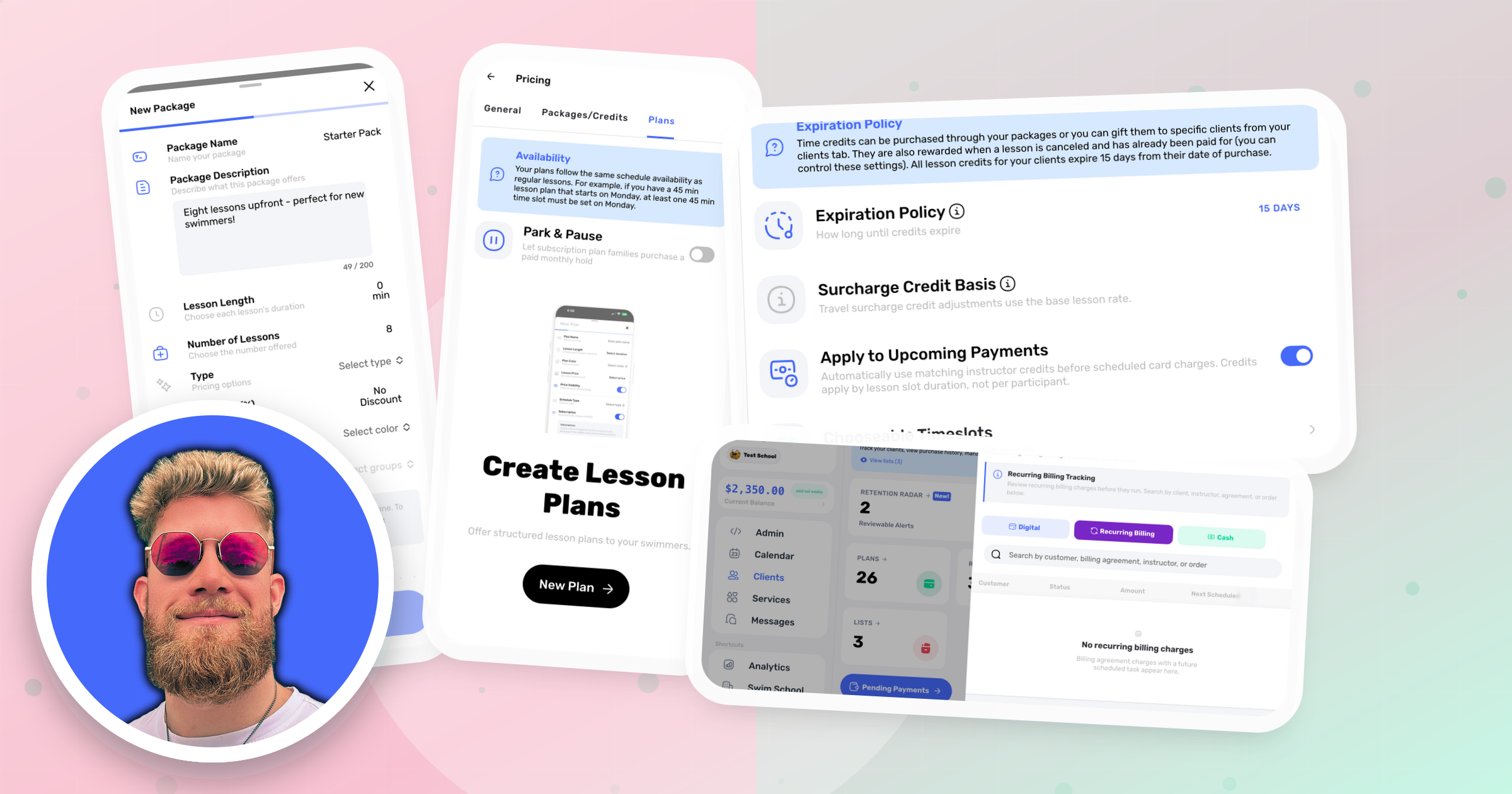
Unexpired credits are a forever-promise. Set a 60-90 day expiration window (generous enough to absorb illness and vacations, short enough that credits get used while motivation is high) and state it at purchase. In Swum's lesson packages you set the expiration per package, and you can also make packages giftable - which quietly turns grandparents into a sales channel.
The credit-liability concept
Every unused credit is revenue you've collected but haven't earned yet - a liability, in accounting terms. If you sell forty 10-packs in June, you're sitting on hundreds of lessons you still owe. That's fine if you know it: don't treat package cash as profit until the credits burn down, and watch your outstanding-credit count the way a restaurant watches outstanding gift cards. Expiration windows are what keep this liability from compounding forever.
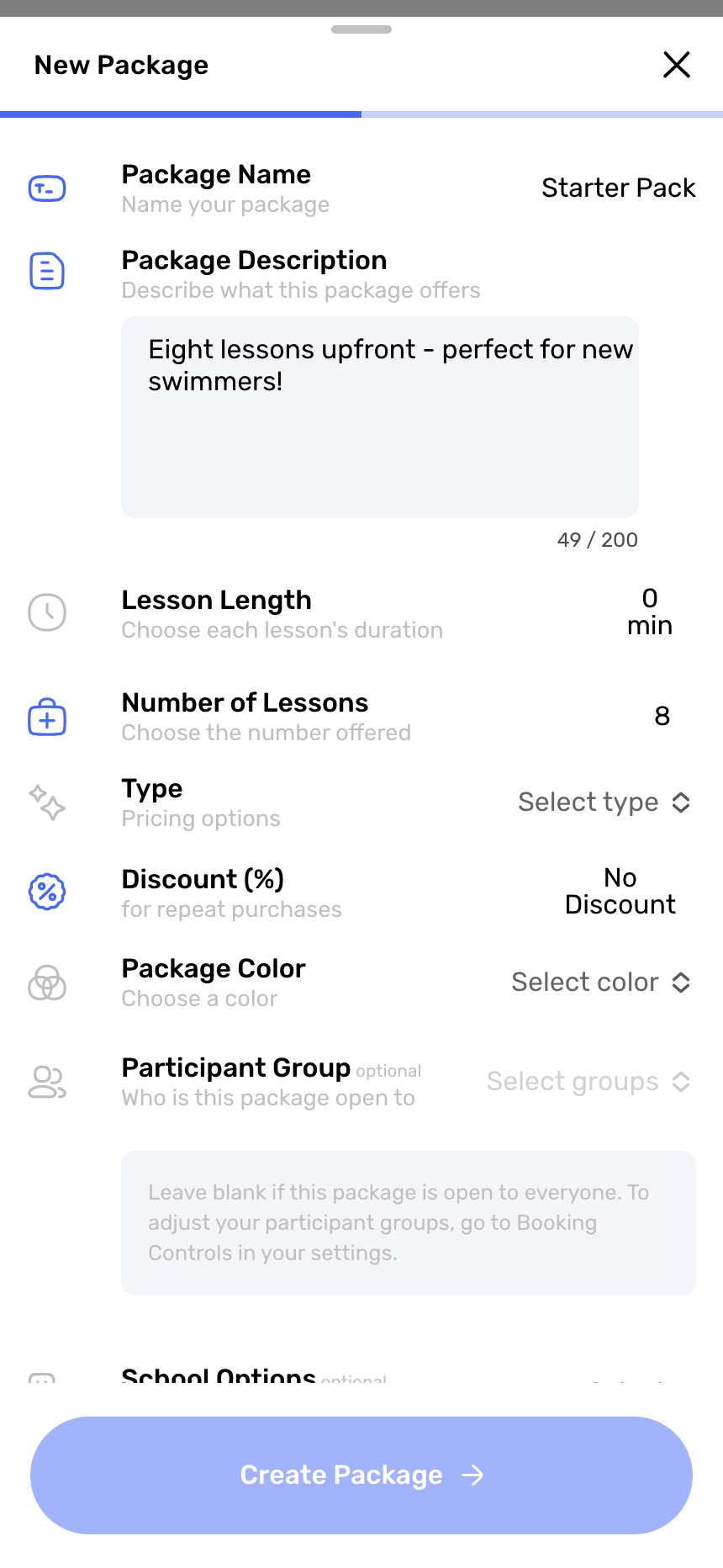
Setting one up takes about a minute - name, lesson count, and your pricing logic (a percentage bulk discount or buy-X-get-Y-free, e.g., "buy 9, get 1 free," which is a 10% discount that feels like a gift instead of a markdown):
Subscription Plans: The Strongest Model in Swim Instruction
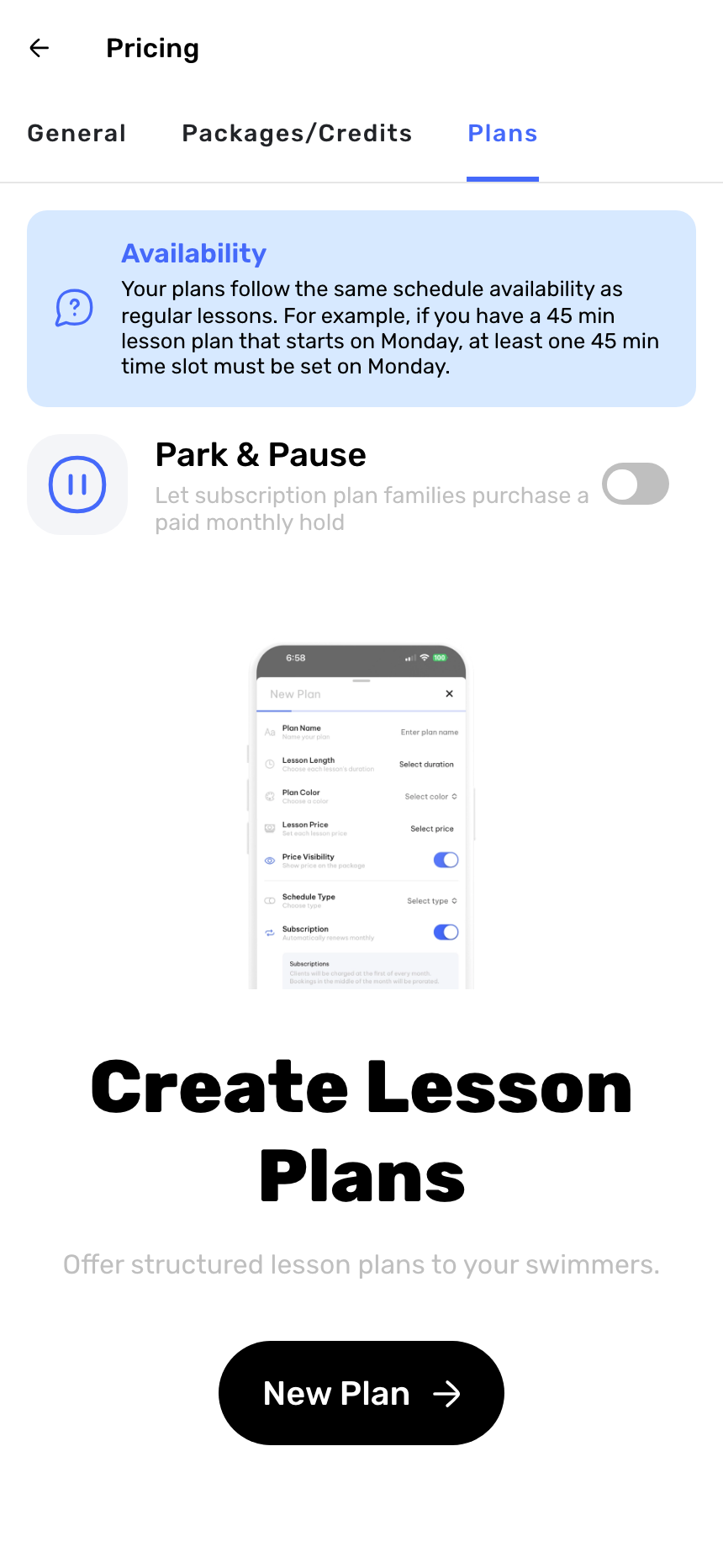
A subscription plan is recurring monthly billing for a standing weekly spot - "4 lessons a month, Tuesdays at 4:00, $240/month, auto-renewed."
Why it out-earns everything else:
- Predictable revenue. Thirty families on plans is a number you can see in January for July. You can hire against it, rent lane time against it, plan your life against it.
- Default-continue psychology. This is the big one. Drop-in families must decide to stay every week. Plan families must decide to leave - send the message, have the conversation, give up the spot. Inertia, which kills drop-in revenue, now works for you.
- The held spot has real value. Tuesday at 4:00 with the instructor your kid loves is a scarce asset. Families don't cancel subscriptions casually when canceling means losing the slot to the waitlist.
Price plans at roughly your mid-size package's per-lesson rate. You're not selling a discount - you're selling the guaranteed recurring spot.
The honest downsides
- Involuntary churn. Cards expire, get reissued, hit limits. A meaningful share of subscription cancellations aren't decisions at all - they're failed payments nobody followed up on. Automated retries and dunning (Swum handles recurring billing and failed-payment follow-up for you) recover most of these; manual invoicing recovers almost none.
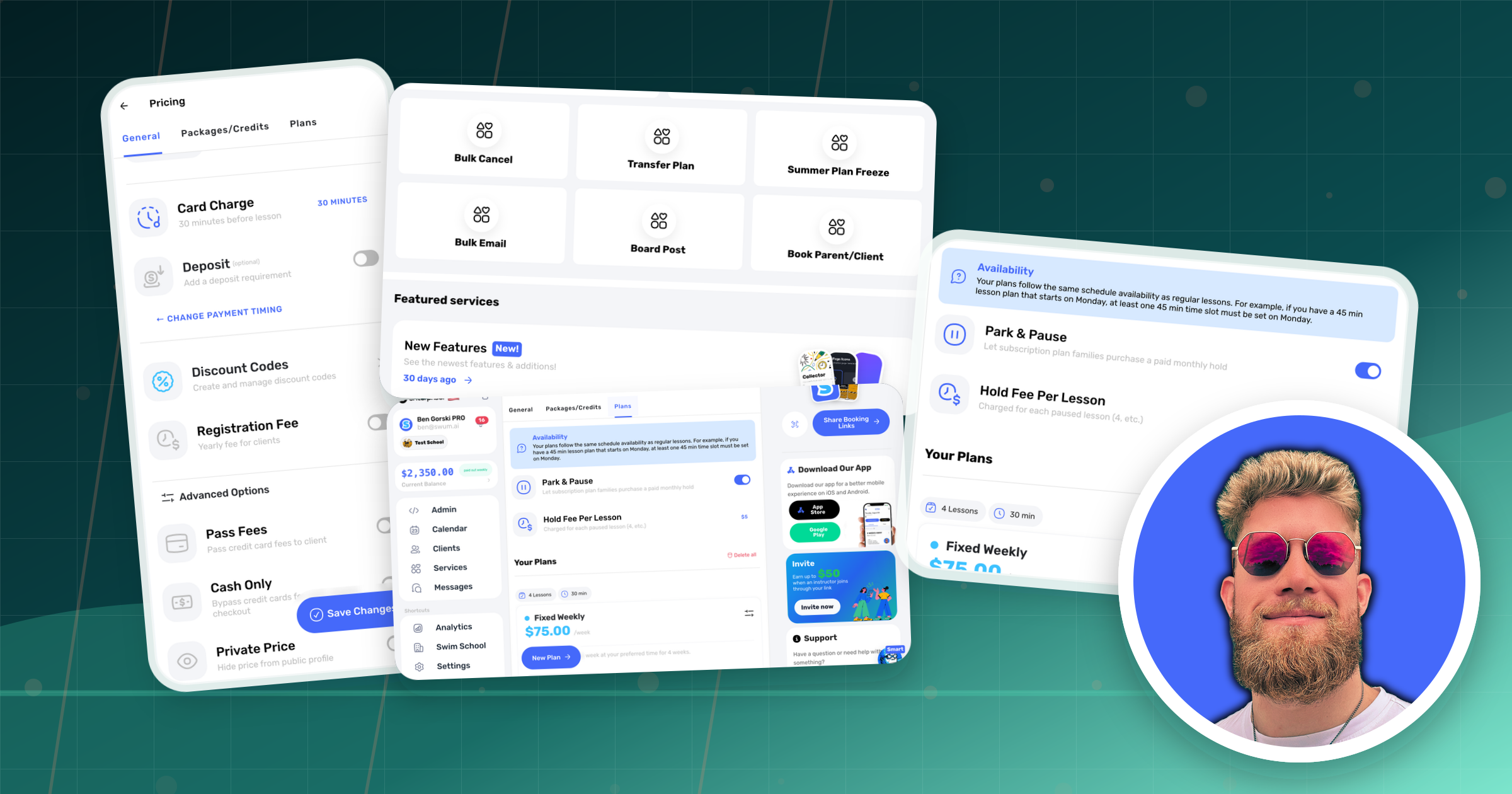
- Pause requests. "Can we skip June? We'll be at the lake." If your only options are full price or cancel, families cancel - and a canceled family re-enrolls at about the rate of a brand-new lead. Build a middle option: pausing must cost something small, and canceling must cost the spot. Swum's Park & Pause does exactly this - the family pays a small hold fee to keep their weekly slot through a break instead of canceling. You keep the relationship; they keep Tuesday at 4:00.
- Makeups. Recurring billing plus a missed lesson creates friction fast if you don't have a clear makeup lesson policy. Decide it before your first plan, not after your first complaint.
The Season-Long Math: 20 Families, Three Models
Here's an illustrative comparison. The assumptions are hypothetical - plug in your own rates and retention - but the shape of the result holds across almost any reasonable inputs.
Setup: 20 families start with you in June. Drop-in rate $60; 8-packs at $440 ($55/lesson); plans at $220/month (4 lessons). Churn assumptions reflect each model's default behavior: drop-in families lapse at ~15%/month (every week is a re-decision), package families decide at each expiration (~75% rebuy), plan families churn at ~5%/month (cancellation requires action).
| Drop-In Only | 8-Packs | Subscription Plans | |
|---|---|---|---|
| June revenue | $4,800 | $8,800 (20 packs) | $4,400 |
| Families still active in September | ~12 | ~15 | ~17 |
| Families still active in November | ~9 | ~11 | ~15 |
| 6-month revenue (Jun-Nov) | ~$20,000 | ~$24,500 | ~$28,500 |
| Cash timing | Even, fragile | Lumpy, front-loaded | Even, durable |
| Lessons still owed in November | 0 | Dozens of credits | 0 |
Three honest readings of this table:
- Packages look amazing in June. Nearly double the cash of either other model - which is exactly why they're the right tool for funding a seasonal ramp. But some of that June cash is credit liability, not earned revenue.
- Plans win on the 6-month line, and the gap keeps widening. Run the same table to month 12 and plans aren't 15% ahead - they're 40%+ ahead, because retention compounds.
- Drop-in isn't close. Same 20 families, same lessons, roughly $8,500 less over six months - the cost of making every family re-decide every week.
And retention is worth more than any single number here: the average learn-to-swim customer is worth at least $1,000 in business, so a model that keeps three extra families per twenty is worth thousands per cohort before you change a single price.
The Hybrid Playbook: Trial → Package → Plan
You don't pick a model. You build a ladder and move families up it:
- Step 1 - the trial. A first-lesson offer (a discounted first lesson or intro assessment) gets new families in the water with near-zero risk. This is your drop-in product doing its real job.
- Step 2 - the package. After lesson one: "Most families start with the 8-pack." The package builds the habit - same day, same time, eight weeks of momentum - and gives you cash up front.
- Step 3 - the plan. As credits run low: "Want to lock in Tuesdays at 4:00 ongoing? The monthly plan holds your spot automatically." The family already has the habit; the plan just removes the re-buying.
Each step has a natural trigger moment, so none of it feels like selling. A mature book of business ends up around 60-70% plan revenue, 20-30% packages, ~10% drop-ins and trials.
Which model fits where you are
| Your situation | Lead with |
|---|---|
| Brand-new instructor, building a roster | Drop-in + first-lesson offer; introduce a small package by month two (new instructor guide) |
| Solo instructor, steady roster | Packages as default purchase; plans for your weekly regulars |
| Mobile instructor | Packages and plans tied to route days - recurring spots make routing dramatically easier |
| Established swim school | Plans as the primary product; packages for intensives and flexible families (swim school software) |
One operational note: this ladder only works if buying is frictionless. If moving from package to plan requires a text thread and a Venmo request, families stall at whatever step they're on. With parent self-booking, card-on-file payments, packages, and plans in one system, the next rung is always one tap away.
FAQ
Are swim lesson packages or subscriptions more profitable?
Subscriptions earn more over a full season because retention compounds - families default to continuing rather than re-deciding. Packages generate more cash up front, though, which is why most successful instructors sell packages to newer families and convert regulars to monthly plans.
How much should I discount swim lesson packages?
The US norm is 8-15% off the single-lesson rate - for example, 8 lessons for the price of roughly 7. Parents buy packages for commitment and convenience, so deeper discounts mostly give away margin without selling more packages.
Should swim lesson packages expire?
Yes. A 60-90 day expiration window is standard - long enough to absorb sick weeks and vacations, short enough that credits get used while motivation is high and don't sit on your books as open-ended liability.
What is a swim lesson subscription plan?
A subscription plan is recurring monthly billing for a standing weekly lesson spot - for example, 4 lessons a month at a set price, auto-renewed. The family keeps the same slot each week, and billing continues until they actively cancel.
How do I handle families who want to pause their swim membership?
Offer a paid pause instead of a binary stay-or-cancel choice: a small monthly hold fee keeps their weekly spot reserved during a break. Families who pause overwhelmingly return; families who cancel re-enroll at roughly the rate of brand-new leads.
What percentage of revenue should come from recurring plans?
A healthy mature mix is roughly 60-70% of revenue from subscription plans, 20-30% from packages, and about 10% from single lessons and trials. New instructors will start far more drop-in heavy and shift over their first few seasons.
Ready to build the ladder? Create your free Swum account and have packages, subscription plans, and parent self-booking live today - start with the lesson packages overview to see how credits, expiration, and gifting work.