Tens of millions of American adults can't swim - by CDC-cited survey estimates, more than one in three US adults can't swim the length of a pool, and a large share won't go in water over their head.
Almost none of them are taking lessons. And almost no instructors are seriously trying to teach them.
That mismatch is one of the best business opportunities in swim instruction. Adult students pay premium rates, book longer arcs, pay with their own money, and want exactly the hours your kid-heavy calendar leaves empty. This guide covers why the market is underserved, the economics, how teaching adults actually differs, and how to market to them without triggering the shame that keeps them away.
Why Adults Are the Most Underserved Market in Swimming
Three forces keep adult non-swimmers out of the water:
Shame and fear. A 7-year-old who can't swim is normal. A 37-year-old who can't swim has often spent decades hiding it - declining pool parties, skipping beach trips, inventing excuses. Walking into a swim school full of toddlers to admit it is, for many adults, harder than the swimming itself.
Nobody is offering them anything. Browse local swim school pages: it's all kids' levels, kids' photos, kids' schedules. Even when adult lessons technically exist, they're an afterthought line at the bottom of the page. The product isn't built for them, and they can tell.
Instructors default to kids. Kids are the visible demand - parents actively search and book. Adults rarely raise their hands, so instructors conclude the demand isn't there. It is. It's just silent, because the barrier to asking is emotional, not logistical.
The instructor who removes the shame barrier doesn't compete for this market. They own it locally, usually unopposed.
The Economics: Why Adult Students Are Worth More
They pay premium rates without blinking
Adult learners self-pay for something they've wanted - often desperately - for decades. They compare your rate to therapy, personal training, or golf lessons, not to the rec center's $15 kids' group slot. Most instructors charge adults at the top of their private-lesson range or 10-25% above it: if your kids' rate is $60 per 30 minutes, $70-$85 for a 45-minute adult session is normal. (Adults also genuinely need 45-60 minutes - more on that below. See the full 2026 pricing guide for baseline ranges.)
They book long arcs
A child might do one summer session. An adult conquering a lifelong fear typically books 10-25+ lessons across months: fear work, then comfort, then strokes, then often a goal like a triathlon, boating safety, or swimming with their own kids. Sell that arc as packages - an 8 or 10-pack fits the natural milestones and commits them through the hard early weeks when quitting is most tempting.
They fill the hours kids can't
Kids book 3:30-7:00 PM weekdays and Saturday mornings - the same crowded window every instructor fights over. Adults want early mornings, weekday middays, lunch hours, and late evenings: exactly the dead zones in your calendar. An adult roster doesn't displace your kid lessons; it monetizes the hours around them. At typical adult rates, even five off-peak adult lessons a week adds $18,000+ per year of gross revenue from hours that were earning zero.
They refer like nothing else
An adult who learns to swim at 40 tells everyone. Their referrals are other adult non-swimmers - the exact clients you can't reach with ads, delivered with trust pre-installed.
How Teaching Adults Differs From Teaching Kids
Adult instruction is not kid instruction with bigger bodies. Four shifts matter:
1. Consent and dignity come first
With kids you might guide, hold, and move them through positions constantly. With adults, narrate and ask before any physical assist: "I'm going to support your back with one hand - okay?" Give them explicit control: a hand signal that means stop, the standing-depth guarantee ("we won't leave water you can stand in until you choose to"), and zero surprises. An adult who feels in control progresses; one who feels handled disappears after lesson two.
Dignity extends to logistics: private or quiet pool times, no audience, never sharing water with a kids' class. Many adult students would rather quit than be watched.
2. Explain the why
Kids learn by play and mimicry. Adults learn by understanding. "Your head weighs about 11 pounds - lift it and your hips sink; rest it in the water and your legs come up" works better than "put your face in." Adults will do uncomfortable things willingly when they understand the physics behind the request. Teach the mechanism, then the drill.
3. Their fear is rational - treat it that way
Never say "there's nothing to be afraid of." An adult's water fear is usually built on a real event - a childhood near-drowning, a parent's drowning, being thrown in to "toughen up" - and reinforced by decades of avoidance. The fear response is a legitimate threat-detection system doing its job; we covered the neuroscience in why water anxiety is rational and how the brain unlearns it, and it's worth reading before your first adult student.
Practical translation: go slower than feels necessary, name the fear openly ("most of my adult students felt exactly this on day one"), and celebrate physiological wins - a relaxed exhale underwater is a bigger milestone than a lap.
4. Progress is non-linear - say so up front
Adults plateau, regress after a missed week, and have breakthrough days that come out of nowhere. A kid shrugs this off; an adult interprets a bad lesson as proof they're "unteachable." Pre-frame it in lesson one: "Around week three or four, most people have a session that feels like going backward. It's normal consolidation, not failure." That one sentence saves more adult students than any drill you know. Logging skills in a progress tracker they can see helps too - on a plateau week, the visible record of how far they've come does the arguing for you.
Marketing to Adults: Discretion Is the Product
Everything about reaching adult students follows one rule: make it possible to start without telling anyone.
- Give adults their own page and language. A dedicated "Adult Lessons" section - or a separate landing page - with adult-specific copy: "It's never too late," "1-on-1 and completely private," "Many of our students start at zero." If your site is wall-to-wall kid photos, adults will assume they don't belong.
- No group photos, no testimonial faces without enthusiastic permission. Many adult students don't want documented proof they took swim lessons. First-name-only testimonials ("Mark, 52, swam his first lap in week six") respect that while still selling.
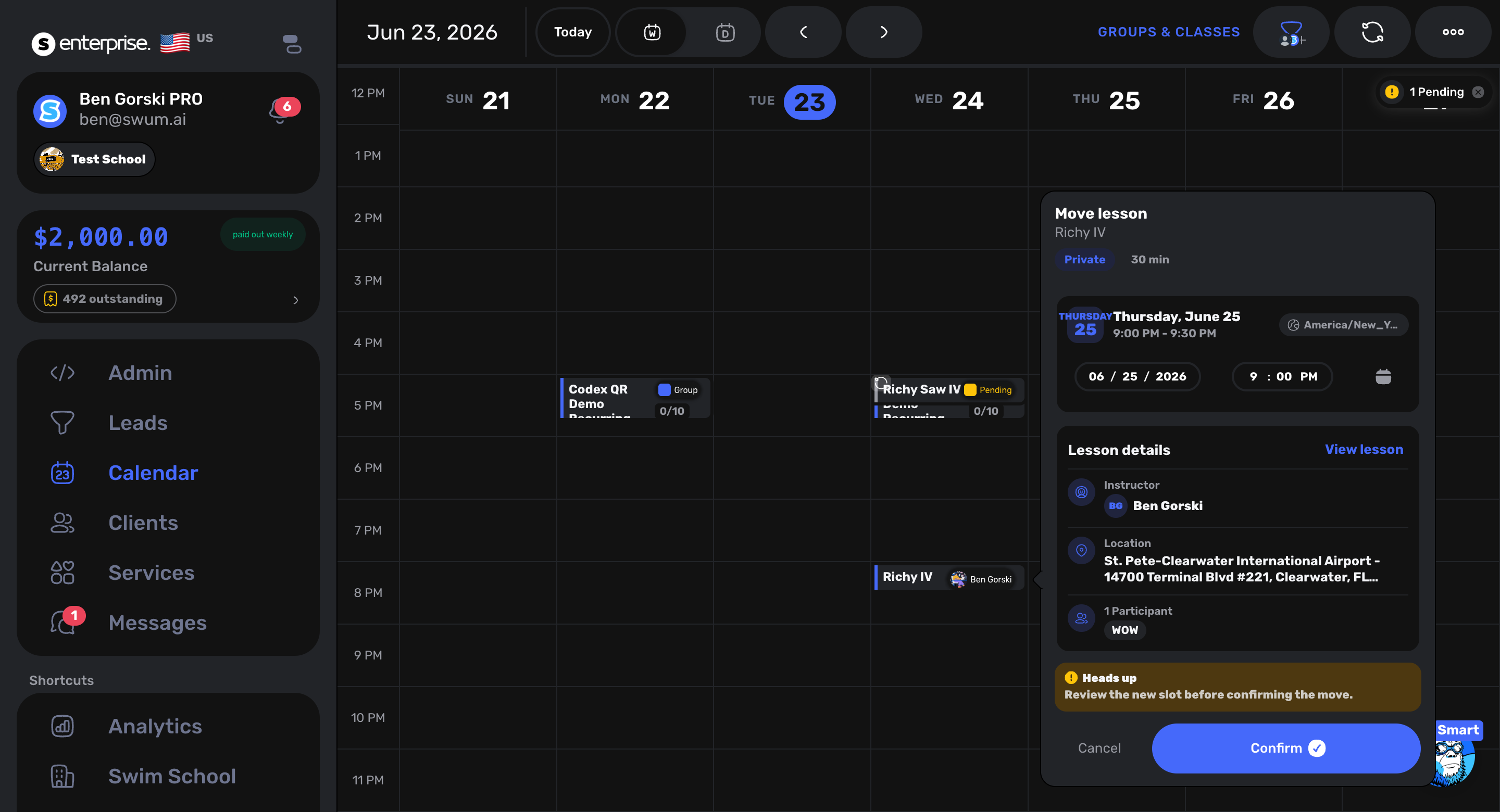
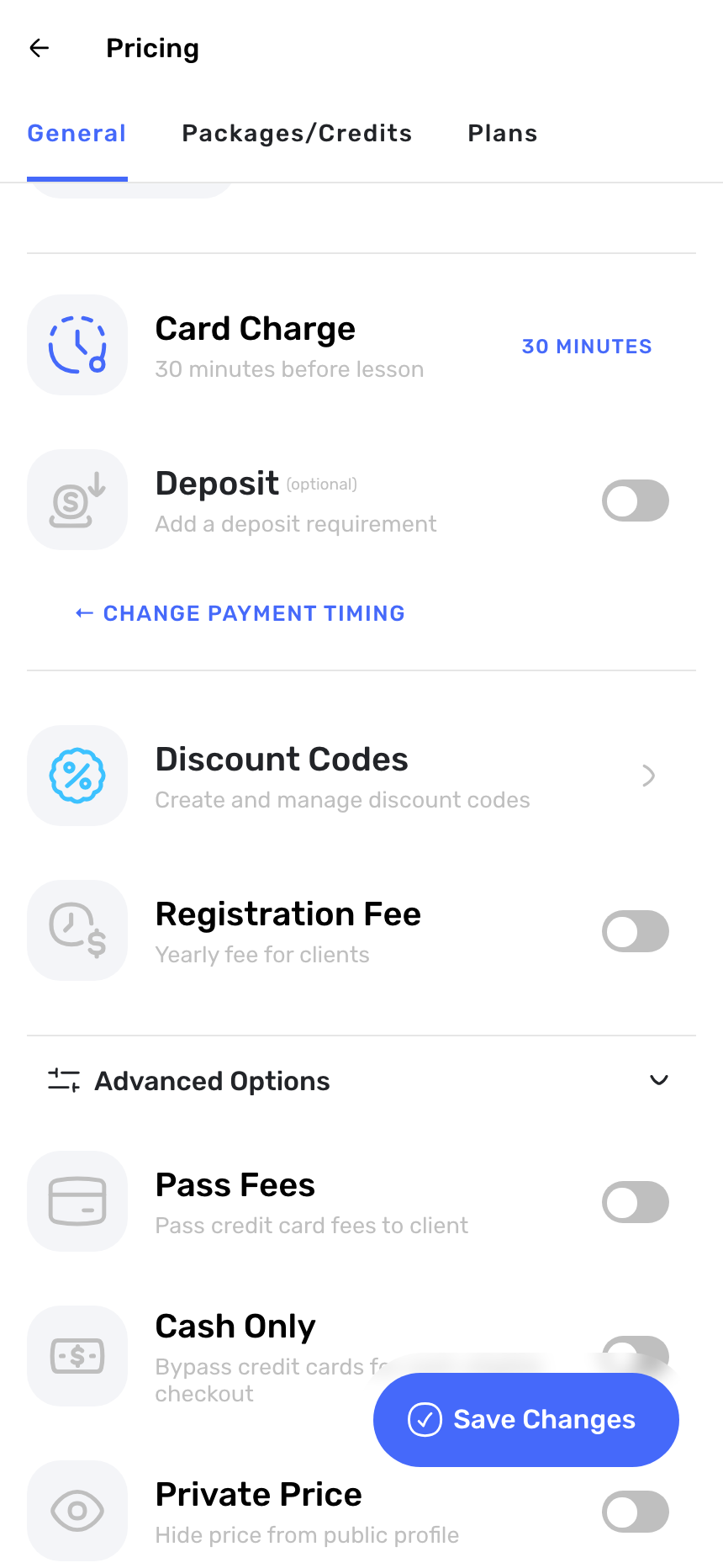
- Let them book without a conversation. The phone call is the barrier. With 24/7 self-booking, an adult can book at 11 PM on the third night they've thought about it - no explaining themselves to a stranger. Swum's booking controls also let you restrict which time slots adult lessons can book, so they land in your quiet, private pool hours by design.
- Keep pricing discreet and friction-free. Card on file, automatic payments, no invoices a spouse might question before they're ready to share. Self-pay adults value "nobody needs to know yet" more than any discount.
- Fish where adults are. Triathlon clubs and run groups (swim is the gating leg), boating and dive shops (certifications require swim tests), parents at your own kid lessons ("I never learned myself" is a sentence you'll hear weekly - have an answer ready), and adult-focused posts in local community groups framed around safety and bucket lists, not embarrassment.
Formats That Work for Adult Lessons
| Format | Typical Pricing | Best For |
|---|---|---|
| Private 45-60 min | Top of your private range, +10-25% | Fearful beginners; the default adult product |
| Small adult-only group (3-4) | $25-$45 per swimmer | Stroke improvement and fitness swimmers, not fear work |
| Semi-private (2 adults) | ~65-75% of private rate each | Couples and friends who signed up together |
| Weekend intensive (2-3 hour blocks over 2-4 days) | $200-$500 per block | Deadline-driven adults: vacations, tri season, certifications |
Notes from the field:
- Privates are the entry product. Fear work in front of strangers doesn't work. Start everyone private; graduate the willing into groups later.
- Adult-only groups must stay adult-only. One shared session with kids and your group is done. Small semi-private lessons work beautifully for couples - built-in accountability, and the per-hour math is better for you.
- Intensives suit adult psychology. A defined block with a defined goal ("comfortable in deep water by Sunday") beats an open-ended weekly commitment for deadline-driven learners - and prices like the premium product it is.
- Sell packages, not drop-ins. The adult journey has a known shape; an 8-10 lesson package matches it and carries students through the week-three dip. Prepaid commitment is half the coaching.
Your First Adult Student: A Quick Checklist
- Add an adult section to your booking page with adult-specific language and zero kid photos
- Open 3-5 off-peak slots (early morning, midday, late evening) reserved for adult bookings
- Set adult pricing: 45-60 minute privates at or above the top of your range
- Create an 8 or 10-lesson adult package
- Write your lesson-one script: consent norms, the stop signal, the standing-depth guarantee, and the non-linear progress pre-frame
- Read the fear science so you never say "there's nothing to be afraid of"
Most instructors who do this report the same surprise: the demand was always there. It was just waiting for someone to make asking safe.
FAQ
How much should I charge for adult swim lessons?
Price adult privates at the top of your private-lesson range or 10-25% above it - typically $60-$100+ for a 45-60 minute session in most US markets. Adults self-pay, compare you to personal training rather than kids' classes, and genuinely need the longer duration.
How long does it take to teach an adult to swim?
Most fearful adult beginners reach basic competence - comfortable submersion, floating, and 25 yards of swimming - in 10-25 lessons over 2-6 months. Adults with water fear progress non-linearly, with plateaus and breakthrough sessions, so longer arcs are normal.
Can a 40 or 50-year-old learn to swim?
Yes - there is no age ceiling on learning to swim. Adults often progress faster than kids once fear is addressed, because they can understand mechanics, follow structured practice, and are strongly self-motivated.
Why don't more adults take swim lessons?
Shame and fear are the main barriers: many adults have hidden their inability to swim for decades and dread being seen learning. Most swim programs are also built and marketed entirely around children, which signals to adults that lessons aren't for them.
Are private or group lessons better for adult beginners?
Private lessons are better for fearful adult beginners, since fear work requires privacy, individual pacing, and trust. Adult-only small groups and semi-privates work well later for stroke development, fitness, and couples learning together.
Do adults with fear of water need a special teaching approach?
Yes. Effective adult instruction treats water fear as rational, uses consent-based physical assistance, explains the why behind every drill, and pre-frames non-linear progress - rather than rushing skills or dismissing the fear.
Ready to open your calendar to the market everyone else ignores? Create your free Swum account and set up discreet 24/7 self-booking for adult students today - with booking controls that put them exactly in the hours you want to fill.