A no-show at 4pm on Tuesday isn't just an awkward 30 minutes at the pool. It's $60 you'll never see, a slot another family wanted, and - if it keeps happening - a quiet signal to every client that your time is negotiable.
Most swim instructors lose 5-15% of potential revenue to late cancellations and no-shows. At 20 lessons a week and $60 a lesson, even the low end of that range is over $3,000 a year - gone, with nothing to show for it.
The fix isn't being tougher. It's having a policy that's designed instead of improvised: one that protects your calendar, stays genuinely fair to families, and gets enforced by your booking system instead of by awkward poolside conversations.
Why "Be Nice and Eat It" Fails
Most instructors start here. A family texts at 3:40 for a 4:00 lesson - "so sorry, Jackson fell asleep!" - and you say no problem, because you're a nice person and you want to keep the client.
Here's what that trains families to do: treat your bookings as suggestions. Not because they're bad people - because you've priced the cancellation at zero, and people respond to prices. The same parent who'd never blow off a $60 concert ticket will blow off a $60 swim lesson if blowing it off costs nothing.
It also doesn't even buy you the loyalty you think it does. The families who no-show casually are disproportionately the families who churn anyway. You're eating losses to retain your least committed clients.
Why the Draconian Version Also Fails
So you swing the other way: 100% charge for any cancellation, no exceptions, in bold red text on the booking page.
That fails differently. Swim lessons are bought by parents of small children - the demographic most likely to face a 6am fever, a daycare exposure, a diaper blowout in the parking lot. A zero-tolerance policy forces families to choose between losing $60 and bringing a sick kid to your pool. Some will bring the sick kid. The rest will resent you, and resentment shows up later as churn and as the silence where referrals used to be.
A policy that's technically enforceable but feels unfair costs you families. The average learn-to-swim customer is worth at least $1,000 in business - never design a policy that wins a $60 argument and loses a $1,000 relationship.
The 3-Part Policy That Works
The policies that survive contact with real families all share the same architecture. Skin in the game at booking, a clear line in the sand, and a fair outcome on each side of the line.
Part 1: A deposit at booking
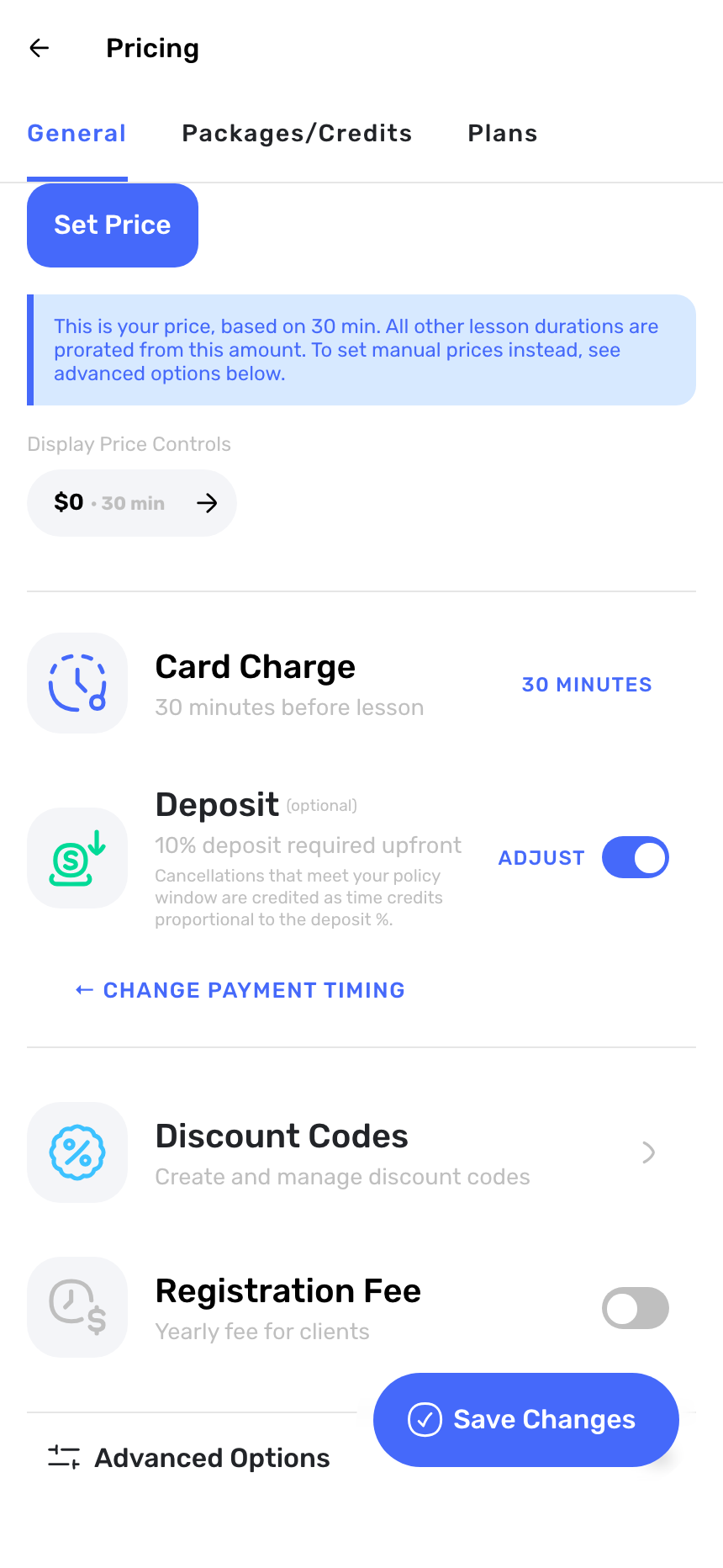
Require 10% (or a small flat amount) the moment a lesson is booked. This does two things:
- It filters out the never-serious. Families who won't put down $6 on a $60 lesson were the no-show risk all along.
- It changes the psychology of the booking. A reserved slot with money attached is an appointment; a reserved slot without money is an intention.
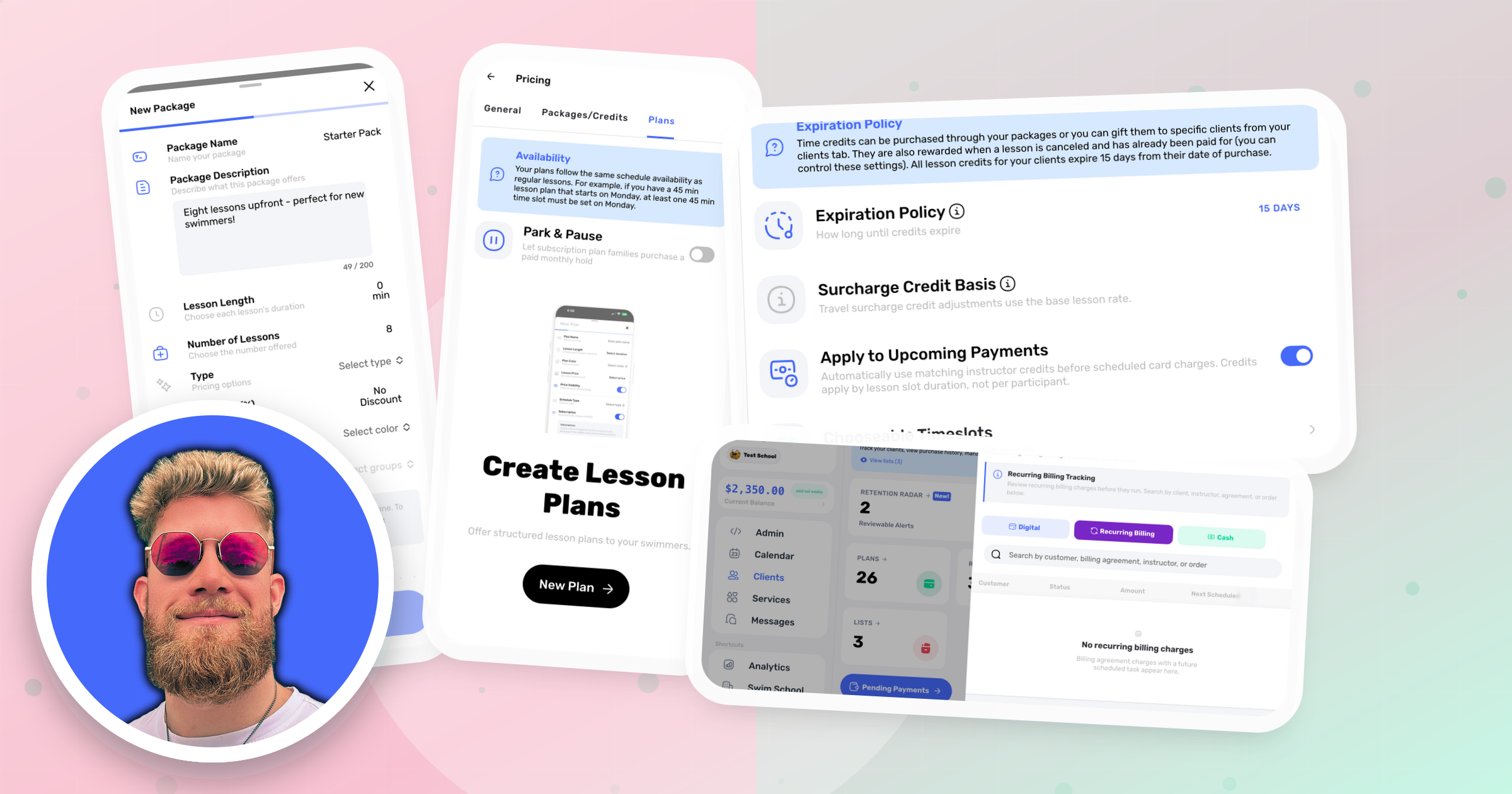
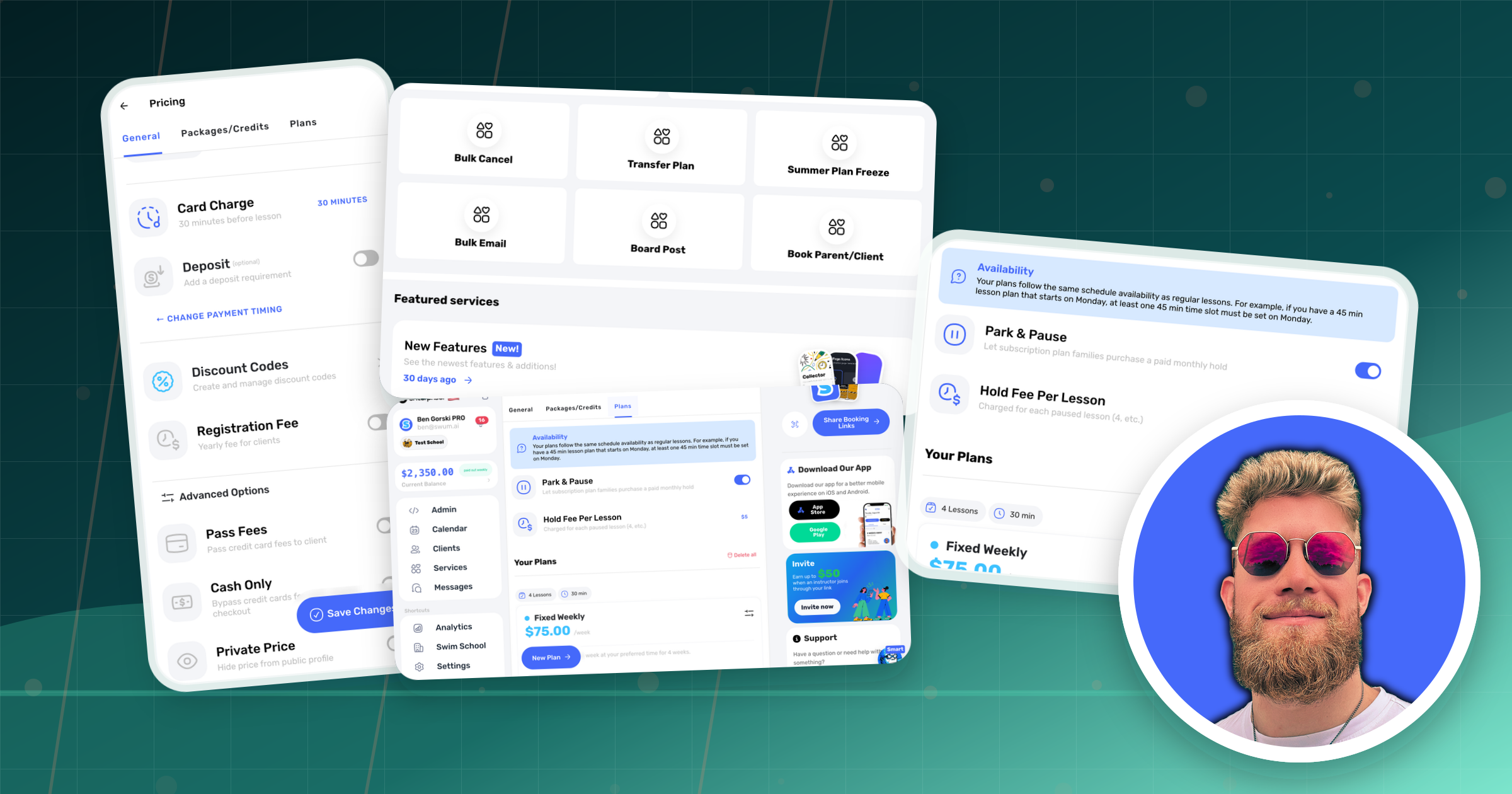
In Swum, this is a toggle - set your payment timing, switch on the deposit percentage, and every booking collects it automatically through payments.
Part 2: A defined cancellation window
Pick a number - 24 or 48 hours is standard - and make everything hinge on it:
- Cancel outside the window: full refund or free reschedule, no questions, no guilt.
- Cancel inside the window: the policy below applies.
Which number? 24 hours is plenty if your schedule has open slots most weeks - you can usually refill with that much notice. Go to 48 hours if you run a waitlist or full schedule, because refilling a premium slot takes longer. Whatever you pick, enforce it with booking controls - minimum notice rules and cancellation windows that the system applies for you - rather than your memory.
Part 3: Time credits instead of refunds inside the window
Here's the move that makes the whole policy feel fair: inside the window, the family doesn't lose their money and you don't lose your revenue. The payment converts to a lesson credit they can use to rebook.
Why this works:
- The family loses nothing they'll miss. They wanted swim lessons; they still have a swim lesson. What they lost is the ability to waste your Tuesday for free.
- You keep the cash. Revenue stays in the business; only the schedule moves.
- It ends the refund argument forever. "Your payment becomes a credit you can use anytime in the next 60 days" is a sentence nobody fights with. "You forfeit your payment" is a sentence everybody fights with.
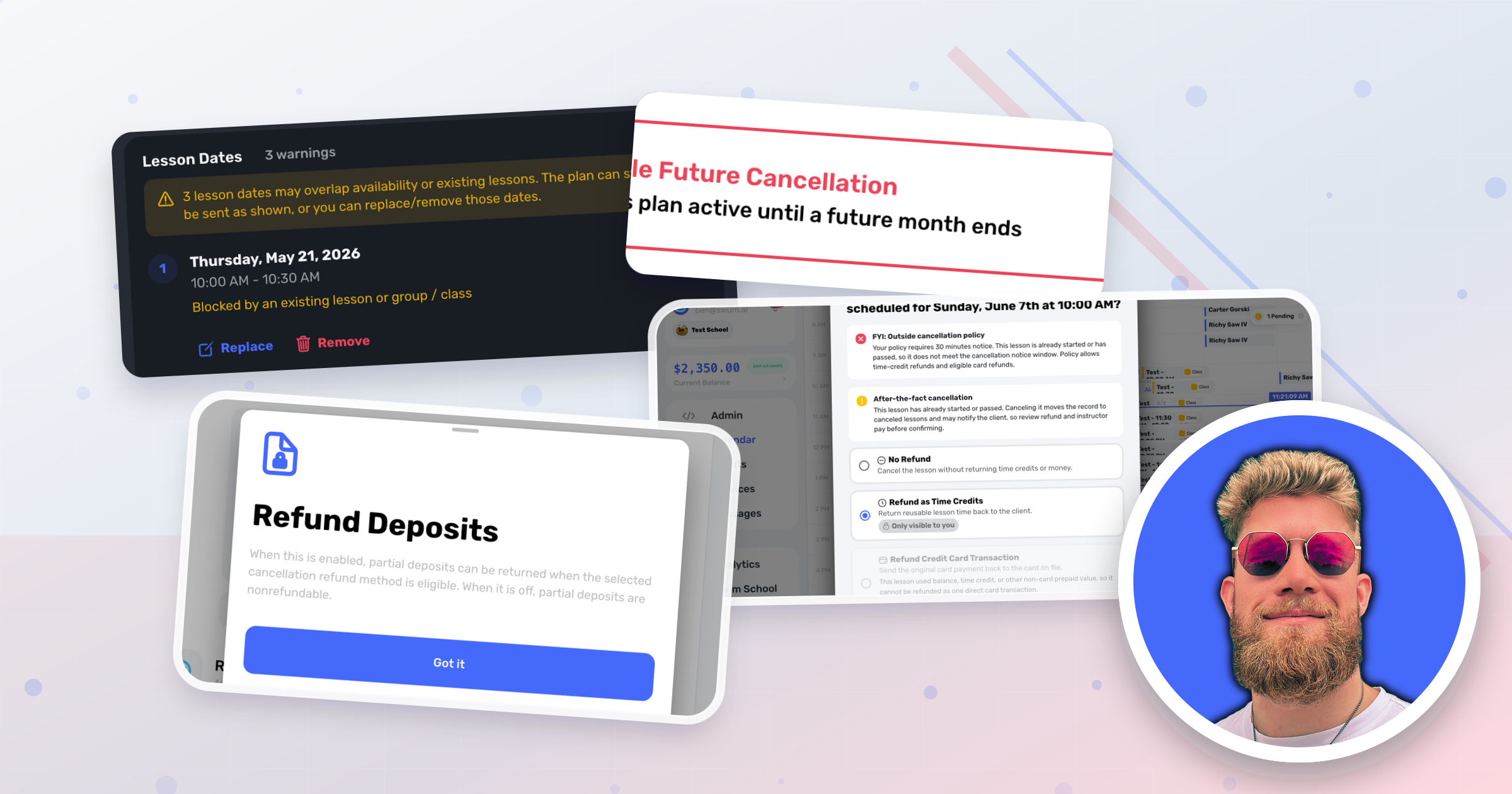
Swum handles this natively - cancellations inside your window return to the family as time credits automatically, and canceled package lessons credit straight back to their balance.
The policy at a glance
| Scenario | What happens |
|---|---|
| Cancel 24+ hours out | Free reschedule or full refund |
| Cancel inside 24 hours | Payment converts to a lesson credit (60-day expiration) |
| No-show, no notice | Lesson charged in full, no credit |
| Instructor cancels | Full refund or credit, family's choice |
| Documented illness / emergency | Credit issued regardless of timing (see exceptions below) |
Notice the no-show line. A late cancellation and a no-show are not the same offense - one gives you information, the other gives you nothing. Your policy should price them differently.
Makeup Lesson Rules (Where Good Policies Go to Die)
Credits and makeups are where generous instructors get buried. Without limits, you end up with families banking two months of makeups, then demanding three lessons a week in your busiest season. Set the rules upfront:
- Cap makeups: 1-2 per month, or 2-3 per session/package. Enough for real life, not enough to make your schedule optional.
- Expire credits: 60-90 days is the standard window. Unexpired credits are unpriced liability sitting on your books.
- Makeups book into open slots only. A makeup is a standby ticket, not a new reservation that displaces paying regulars.
- Makeups don't generate makeups. Miss a makeup lesson, and it's gone.
A full system for this - credit tracking, expiration, slot eligibility - is exactly what makeup lesson software exists to automate.
Communicating the Policy Without Sounding Hostile
A policy nobody saw is a policy you can't enforce. A policy written like a legal threat drives families away before lesson one. The tone you want: matter-of-fact, mutual, brief. Three touchpoints:
At booking
"A quick note on scheduling: lessons canceled with 24+ hours notice reschedule free. Inside 24 hours, your payment becomes a lesson credit good for 60 days - so you never lose money, just pick a new time. No-shows are charged in full. This keeps the schedule fair for every family."
One paragraph, on the booking page, agreed to before payment. (If you collect digital waivers, the policy acknowledgment rides along with them.)
In the confirmation
"Reminder: free changes until Monday 4:00pm. After that, your payment converts to a lesson credit. Need to move it? Reschedule here: [link]"
The deadline as a concrete day and time, not "24 hours" - parents shouldn't have to do date math.
At the first violation
The first late cancellation from a good family is a relationship moment, not an enforcement moment:
"No problem at all - Jackson's lesson converted to a credit, so you've got a free 30-minute lesson to book anytime in the next 60 days. Heads up that same-day changes always work this way, so the earlier you can let me know, the better. See you next Tuesday!"
You enforced the policy and the family feels taken care of. That's the whole trick: when the inside-the-window outcome is a credit instead of a forfeiture, enforcement and kindness are the same message.
Weather, Illness, and the Exceptions That Keep You Human
Hard-coding zero exceptions makes you the villain in stories parents tell other parents. Build the exceptions into the policy so they're rules, not favors:
- Illness: Credit regardless of timing. You want sick kids staying home - a contagious kid in your pool can cost you a week of lessons. Asking for a quick heads-up text is fair; asking for a doctor's note is theater.
- Weather: If you cancel (lightning, unsafe conditions), it's always a full credit or refund - your call to cancel, your cost. For outdoor pools, decide and announce by a set time (e.g., 2 hours before) so families aren't guessing.
- True emergencies: Have a private "one grace per family per session" rule. You don't advertise it; you deploy it when life genuinely happens. Discretion you control is generosity; discretion families demand is a loophole.
The pattern: exceptions are defined categories you decided in advance, not negotiations conducted one upset text at a time.
Let Software Be the Bad Cop
The real reason instructors under-enforce isn't softness - it's that enforcement used to require a confrontation. Every late cancel meant choosing between an awkward conversation and eating the loss. Software removes the choice:
- Deposits collect themselves. No invoice-chasing; the booking doesn't complete without it.
- Windows enforce themselves. Inside the cutoff, the self-service cancel button issues a credit instead of a refund. The system delivers the news; you deliver the empathy.
- Edge cases route to you. Swum's reschedule approval requests let families ask to move a lesson inside the window - you approve or decline with one tap, keeping the human judgment without the phone tag.
- Minimum notice and cancellation rules live in booking controls, set once, applied to everyone identically - which is also your defense against "but you let the Hendersons do it."
When the policy is enforced by the system, you're never the bad guy. You're the person who helps families navigate a policy that simply exists - like an airline gate agent who finds you a seat, not the one who wrote the fare rules.
Copy-Paste Policy Template
Adapt the numbers to your business and put this on your booking page:
Scheduling & Cancellation Policy
Booking: A 10% deposit reserves your lesson time. The remainder is charged [24 hours before the lesson / at booking].
Changes & cancellations: Lessons may be rescheduled or canceled free of charge up to 24 hours before the start time. Inside 24 hours, your payment converts to a lesson credit valid for 60 days - you won't lose your payment, just rebook at a time that works.
No-shows: Lessons missed without notice are charged in full and are not eligible for credit.
Makeup lessons: Credits may be used for any open slot on the schedule, up to 2 makeup lessons per month. Makeup lessons that are missed are not re-credited.
Illness: If your swimmer is sick, stay home - just send a quick message and we'll issue a credit regardless of timing.
Weather: If we cancel for weather or pool conditions, you'll receive a full credit or refund, your choice.
Thanks for helping us keep the schedule fair for every family.
Seven short blocks. Every scenario priced in advance. Nothing left to negotiate at 3:40 on a Tuesday.
FAQ
What is a fair cancellation policy for swim lessons?
The standard that works: free rescheduling with 24-48 hours notice, payment converted to a lesson credit (not forfeited) for cancellations inside the window, and full charge with no credit for no-shows. Pair it with defined illness and weather exceptions so the policy stays fair.
Should I charge for no-show swim lessons?
Yes - charge no-shows in full, and treat them differently from late cancellations. A late cancel gives you notice and earns a credit; a no-show gives you nothing and shouldn't be rewarded the same way.
How far in advance should swim lesson cancellations be required?
24 hours is the most common window and works if you usually have open slots to refill. Use 48 hours if you run a full schedule or waitlist, since premium slots take longer to refill on short notice.
Should I give refunds or credits for canceled swim lessons?
Outside your cancellation window, offer a full refund or free reschedule. Inside the window, issue a lesson credit instead of a refund - the family keeps full value toward a future lesson, you keep the revenue, and there's nothing to argue about.
How many makeup lessons should I allow?
Cap makeups at 1-2 per month or 2-3 per package, give credits a 60-90 day expiration, and only let makeups book into open slots. Without caps, banked makeups pile up and turn your schedule into a standby line.
Should swim lessons require a deposit?
Yes - a 10% deposit at booking is the most effective single no-show deterrent. It filters out never-serious bookings and turns a reservation into a commitment, while staying small enough that no family objects.
Ready to stop enforcing your policy by text message? Create your free Swum account and set up deposits, cancellation windows, and automatic time credits in minutes - then see how booking controls handle the rest.