Here's the honest answer up front:
Facility swim instructors typically earn $15-$25 per hour in 2026. Senior instructors and coordinators at premium swim schools can reach $30+ per hour.
Independent instructors typically gross $70-$140 per teaching hour - and after pool costs, fees, and unpaid admin time, most net 2-4x what they'd make as an employee for the same hours in the water.
Both numbers are real. The gap between them is not magic - it's rate, utilization, and costs, and the rest of this guide is the math.
Facility and Employee Wages in 2026
If you teach as a W-2 employee at a swim school, YMCA, rec center, or country club, your pay is a wage, not a rate. Typical US ranges:
| Role | Typical Hourly Pay |
|---|---|
| Entry-level group instructor (rec center, Y) | $13-$17 |
| Certified instructor (WSI or equivalent) | $16-$22 |
| Private-lesson instructor at a swim school | $18-$28 |
| Senior instructor / lead / coordinator | $25-$35 |
| Swim team coach (club, part-time) | $20-$40 |
A few realities of the employee path:
- The facility keeps the spread. A swim school charging parents $50 per 30-minute private lesson ($100/hour of pool time) and paying you $20/hour keeps the other $80 to cover pool, insurance, marketing, admin - and margin.
- You trade upside for simplicity. No insurance to buy, no clients to find, guaranteed water, predictable paychecks. For your first season or two, that trade is often worth taking while you learn to teach.
- Hours are capped by the schedule. You earn only when the facility books you, and prime slots go to senior staff.
Full-time facility instructors generally land between $28,000 and $45,000 per year. That's the ceiling problem the independent path exists to solve.
The Independent Instructor Formula
Independent income is four numbers multiplied and subtracted:
Gross = rate × lessons per week × weeks taught. Net = gross − pool costs − fees − insurance/equipment.
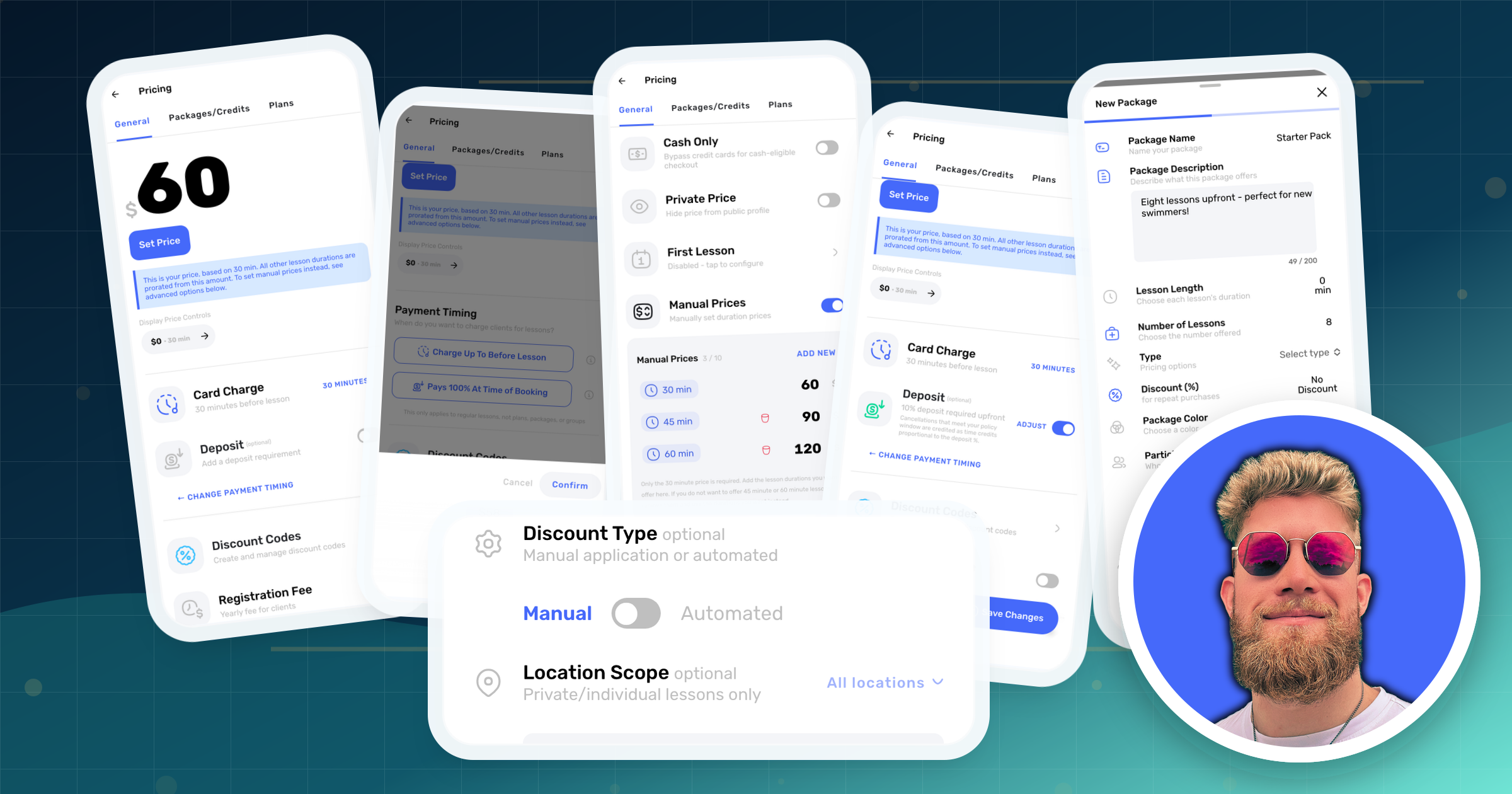
In 2026, most private 30-minute lessons run $35-$70, with experienced instructors in major metros at $80-$120 and mobile instructors adding a 20-50% travel premium. (Full breakdown by format and region in the 2026 pricing guide.)
Two 30-minute lessons per hour means a $60 lesson rate is $120 per teaching hour, gross. Now the subtractions:
- Pool costs: $0 if you teach in your own or clients' pools; $20-$60/hour if you rent lanes.
- Payment and platform fees: anywhere from ~3% (bare card processing) to 20%+ (marketplace platforms). This one is bigger than most instructors think - it gets its own section below.
- Insurance and equipment: roughly $300-$600 per year all-in. Real, but small per lesson.
- Unpaid time: drive time, admin, marketing. You can't eliminate it, but software and dense scheduling shrink it dramatically.
Season Math: 15, 20, and 25 Lessons Per Week
Assume a $60 private 30-minute lesson, a 40-week teaching year (most independents lose some weeks to holidays, weather, and the winter dip), and roughly 8% of gross going to costs other than payment fees.
| 15 lessons/week | 20 lessons/week | 25 lessons/week | |
|---|---|---|---|
| Teaching hours/week | 7.5 | 10 | 12.5 |
| Weekly gross | $900 | $1,200 | $1,500 |
| Annual gross (40 weeks) | $36,000 | $48,000 | $60,000 |
| After ~8% pool/insurance/equipment | ~$33,100 | ~$44,200 | ~$55,200 |
Three things to notice:
- These are part-time hours. 25 lessons is 12.5 hours of water time per week. Many independents teach 30-40+ lessons in peak season.
- The rate is the multiplier. The same 20-lesson week at $80 grosses $64,000; at $100 (realistic for experienced metro and mobile instructors) it's $80,000.
- Weeks taught matter as much as rate. An instructor who keeps families through the winter at 45+ weeks beats a summer-only instructor charging $20 more.
Employee vs. Independent at Equal Hours
Here's the comparison that actually matters: the same 10 hours per week in the water, 40 weeks a year.
| Facility Employee | Independent Instructor | |
|---|---|---|
| Pay basis | $20/hour wage | $60 per 30-min lesson |
| Gross per teaching hour | $20 | $120 |
| Annual gross (10 hrs/week, 40 weeks) | $8,000 | $48,000 |
| Pool, insurance, equipment | $0 | ~$3,800 |
| Payment/platform fees | $0 | $2,400-$11,000 (see below) |
| Finds own clients, runs admin | No | Yes |
| Approximate take-home (pre-tax) | ~$8,000 | ~$33,000-$42,000 |
Even after every cost, the independent earns roughly 4-5x the employee for the same water hours. The price of that gap is the business work: marketing, scheduling, policies, and taxes (remember self-employment tax runs ~15.3% on net earnings - put a third of net aside).
If you're earlier in that journey, our new instructor resources cover the business side step by step.
What Separates $30k Instructors From $100k+ Instructors
Same certification, same market - wildly different incomes. The difference is almost always these four levers:
1. Rate discipline
$30k instructors price against the rec center and never raise rates. $100k instructors price against other private instructors, raise rates annually, and treat a waitlist as a signal to charge more. The jump from $50 to $75 per lesson is a 50% raise with zero extra hours.
2. Retention over acquisition
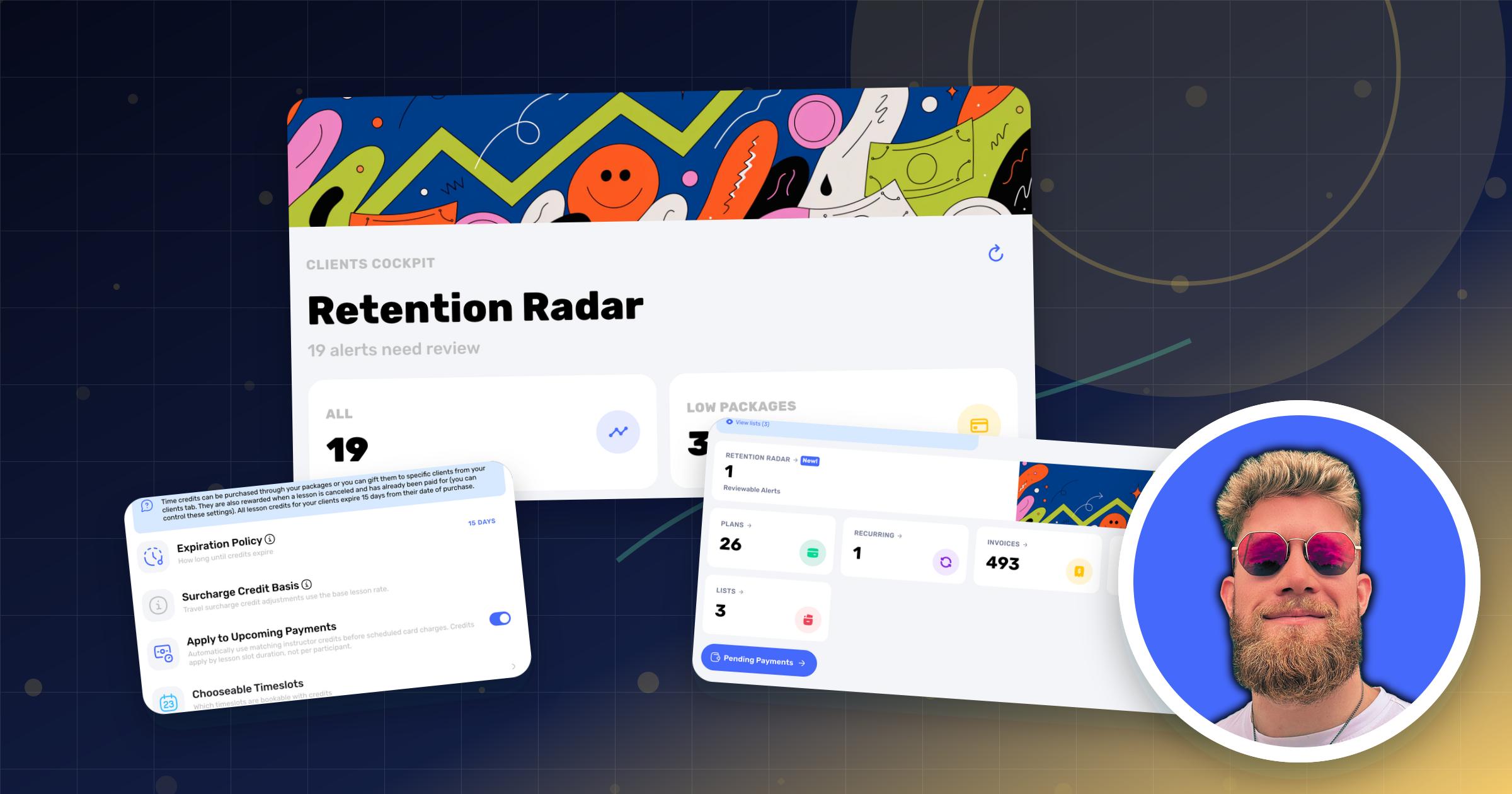
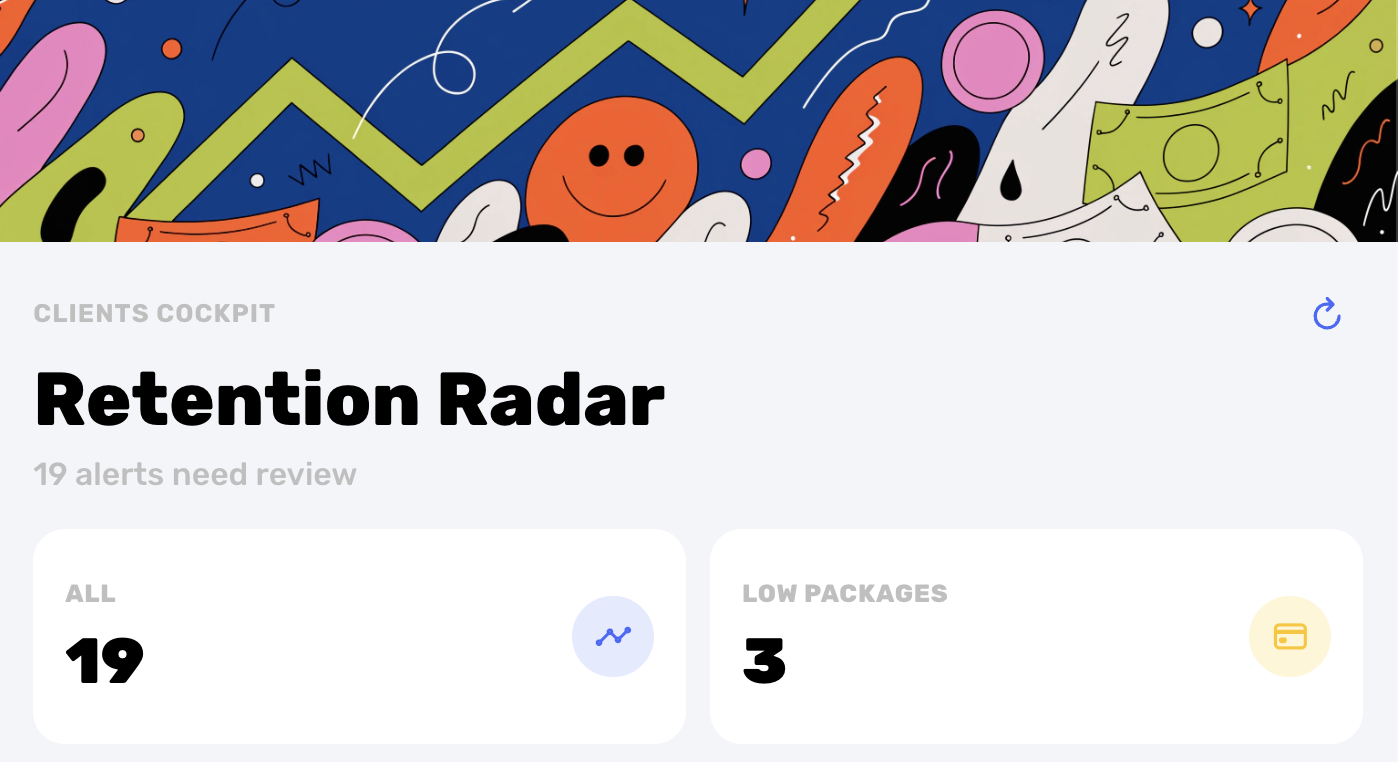
Replacing a family costs marketing time and an empty slot; keeping one costs nothing. The average learn-to-swim customer is worth at least $1,000 in business - so the instructor who keeps families two seasons instead of one effectively doubles revenue per client. High earners run on subscription plans and packages, where continuing is the default. Tools help here too: Swum's Retention Radar flags low package balances, ending plans, and newly open slots before they become churn.
3. Formats beyond 1-on-1
Privates earn the most per booking; semi-privates and small groups earn the most per hour. A semi-private at $40 per swimmer with two swimmers is $160/hour against a $120/hour private. High earners run privates as the premium product and use semi-privates and groups to raise the value of every hour of rented water.
4. Recurring plans and a full off-season
Subscription plans turn September re-enrollment from a sales campaign into a billing event. The $100k+ instructors also defend the winter: indoor water, holiday-themed intensives, and paid-hold options (like Swum's Park & Pause) that keep a family's spot - and some revenue - through the slow months instead of resetting to zero every spring.
The Fee Drag: What You Keep, Not What You Charge
Two instructors charge $60. One takes home $46, the other $57. Nothing changed except the platform.
Marketplace and booking platforms commonly take large cuts; even "free" tools stack processing fees, per-booking charges, and subscription tiers. On Swum's pricing, the comparison is explicit:
| Swum Standard ($0/mo) | Swum Pro ($98/mo) | |
|---|---|---|
| Total fees on payments | 23% | 5% |
| $60 lesson take-home | $46.20 | $57.00 |
| 20 lessons/week, monthly take-home | ~$3,696 | ~$4,462 |
At roughly 9+ lessons per week, Pro pays for itself - and at 20 lessons a week the difference is over $9,000 a year, which is a bigger raise than most rate increases. You can also pass card fees through to clients at checkout and accept ACH bank payments on larger purchases like packages.
If you run a school with staff, the same logic applies one level up: your margin is what parents pay minus what you pay your instructors minus your fee stack.
The Fine Print: Taxes, Benefits, and Unpaid Hours
An honest earnings guide has to include the parts that don't show up on the rate card:
- Self-employment tax. Independents pay both halves of Social Security and Medicare - about 15.3% on net earnings - on top of income tax. The working rule: set aside roughly a third of net income and pay quarterly estimates.
- No benefits. Employees may get health coverage, paid time off, and workers' comp. Independents buy their own. Price it into your rate rather than discovering it in April.
- Unpaid hours are real but shrinkable. Plan on 3-6 admin hours per 20 teaching hours when you run things manually - scheduling texts, payment chasing, rebooking. Self-booking, auto-billing plans, and automated makeup credits push most of that to near zero, which is the quiet reason software changes the per-hour math.
None of this erases the gap from the table above. A $40,000 independent take-home minus self-employment tax still beats an $8,000 W-2 paycheck for the same water hours by a wide margin. It just means your sticker rate and your wage are different units - convert before you compare.
So Which Path Should You Take?
- Take the facility job if: you're new to teaching, you want reps and mentorship, or you want zero business overhead. It's a paid apprenticeship.
- Go independent if: you have a season or two of experience, access to water, and the willingness to spend a few hours a week on the business side. The income ceiling is simply in a different category.
- Do both if: you're transitioning. Many instructors keep facility hours while building a private roster on evenings and weekends, then flip when the private calendar fills.
Whatever the path, the formula doesn't change: rate × lessons × weeks, minus costs and fees. Every section of this guide is just a way to move one of those numbers.
FAQ
How much do swim instructors make per hour?
Facility employees typically earn $15-$25 per hour in 2026, with senior instructors reaching $30+. Independent instructors gross $70-$140 per teaching hour by charging $35-$70 per 30-minute private lesson.
How much do private swim instructors make a year?
A part-time independent teaching 20 lessons a week at $60 over a 40-week year grosses about $48,000. Full-schedule instructors at higher rates - especially in major metros or mobile - regularly clear $80,000-$100,000+ before taxes.
Is teaching swim lessons a good side hustle?
Yes - it's one of the highest-paying part-time skills available. Even 10 lessons a week at $60 adds roughly $24,000 a year in gross revenue for about 5 hours of water time per week.
Do swim instructors make more than lifeguards?
Almost always. Lifeguards typically earn $12-$18 per hour, while certified swim instructors earn $15-$25 as employees and far more independently. Many instructors hold both certifications and teach for the higher rate.
How much do swim instructors make at the YMCA or a swim school?
Entry-level group instructors at YMCAs and rec centers typically earn $13-$17 per hour, certified instructors $16-$22, and private-lesson instructors at dedicated swim schools $18-$28.
How do independent swim instructors get paid?
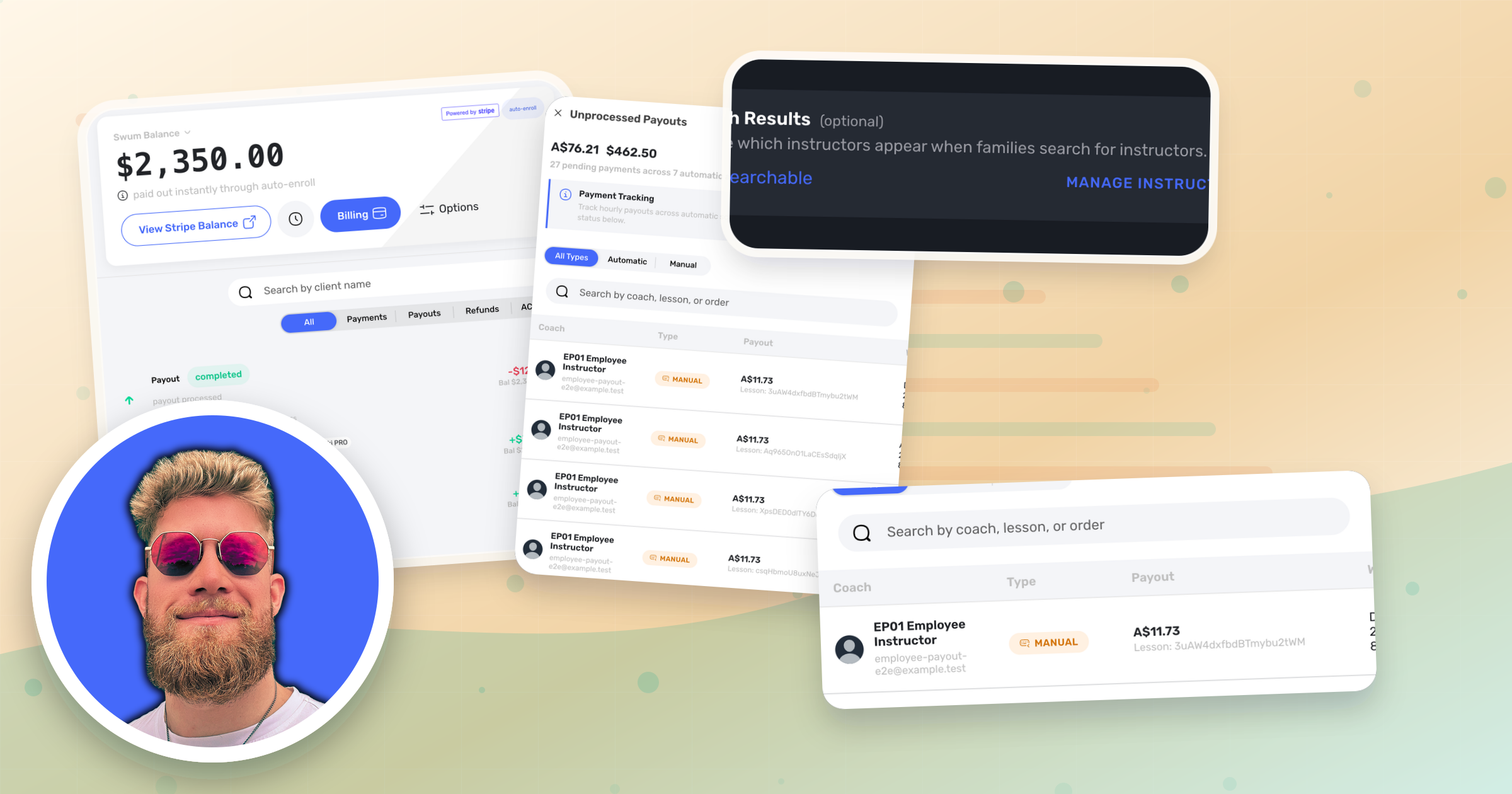
Most use a booking platform that charges cards or bank (ACH) payments at booking or before the lesson, often with deposits and prepaid packages. The fee stack matters: platform and processing fees range from about 3% to over 20% of every payment.
Want to keep more of every lesson you teach? Create your free Swum account and compare what you'd take home on Standard vs. Pro with your own numbers on the pricing page.