Hey fellow instructors! We've all been there - working with a determined 3-year-old who just won't stay underwater for more than a couple seconds. Teaching underwater skills to 3-year-olds requires specialized techniques that address their unique developmental needs, combining patience with proven methods that work specifically for this challenging age group.
You know that every child is different, but there are consistent patterns with 3-year-olds who struggle with breath control. The key lies in understanding their developmental stage while implementing progressive techniques that build confidence alongside competency.
This comprehensive guide breaks down the exact methods that turn underwater-anxious toddlers into confident young swimmers who can stay submerged long enough to actually learn swimming skills.
Understanding the 3-year-old underwater challenge
Three-year-olds face unique obstacles when learning to stay underwater that differ significantly from older children. Their developmental stage creates specific challenges: limited breath control capacity, strong survival instincts that prioritize quick air access, and cognitive patterns that focus on immediate comfort over skill development.
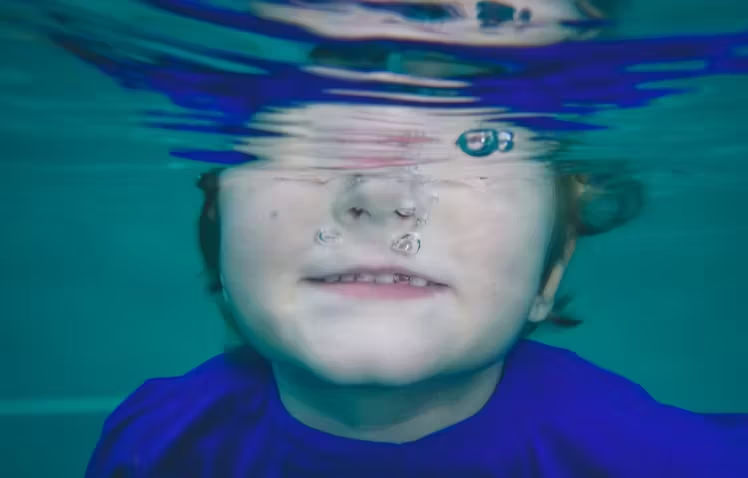
The most common issues include breathing out through the nose, which creates panic when water enters, and over-lifting the head to reach air quickly rather than maintaining streamlined position. Many 3-year-olds also demonstrate eyes-closed behavior even with goggles, indicating anxiety rather than just discomfort.
Physiologically, 3-year-olds have smaller lung capacity and are still developing breath awareness. They often don't understand the concept of "holding" breath versus simply not breathing. Their natural instinct pushes them to surface quickly when they feel any water pressure on their face.
The psychological component proves equally important. Three-year-olds are just beginning to understand cause and effect, making it difficult for them to trust that staying underwater briefly is safe. Their limited attention span means traditional breath-holding exercises often fail because they lose focus before developing competency.
Motor control issues also impact underwater success. Many 3-year-olds lack the coordinated muscle control needed to maintain proper head position while managing breathing, leading to the rapid head-lifting pattern you've observed.
What makes 3-year-olds different underwater
Developmental factors create specific learning requirements for this age group. Three-year-olds are concrete thinkers who need immediate, tangible feedback rather than abstract concepts like "hold your breath longer." They respond to visual cues, games, and activities that make sense within their limited life experience.
Attention span limitations mean activities must be brief, varied, and engaging. A 3-year-old's focus typically lasts 3-5 minutes maximum for any single activity, requiring instructors to cycle through multiple approaches within each lesson rather than drilling one technique extensively.
Trust building takes precedence over technical skill development. Three-year-olds need to feel completely safe and supported before attempting challenging skills like extended breath holding. This means relationship-focused instruction works better than technique-focused approaches.
Physical development considerations include limited core strength for maintaining proper body position, developing coordination between breathing and movement, and still-maturing sensory processing that can make underwater experiences overwhelming.
Progressive breath control techniques for toddlers
Start with breath awareness exercises outside the water before attempting any submersion. Have the child practice "holding bubbles in their cheeks" - demonstrate by puffing your cheeks and holding for 3 seconds, then releasing. This creates a visual, tangible understanding of breath control.
The "motorboat game" works exceptionally well with 3-year-olds. Sit facing each other in shallow water and make motorboat sounds: "putt-putt-putt" with lips barely touching the water surface. Progress to chin level, then mouth level, creating bubbles with each "putt" sound. This naturally teaches controlled exhalation while making it playful.
Bubble sandwich technique addresses the nose-breathing issue directly. Have the child take a big breath, then "make a bubble sandwich" by placing their mouth and nose just under water while slowly releasing air through both. The visual of bubbles coming from their face helps them understand the concept of controlled air release.
Progressive timing builds capacity systematically. Start with 1-second submersion goals: "Let's count to 1 underwater!" Use your finger to show the count visually underwater. Once mastered, progress to 2 seconds, then 3, building success step by step. Never skip levels - 3-year-olds need to master each stage completely before advancing.
The "fishy kiss" game encourages proper mouth positioning. Have children give "kisses to the fishy" (your hand or a toy) by pursing their lips and going underwater briefly. This creates proper mouth closure while making the activity fun and familiar.
Fixing the over-lifting head problem
Head position issues stem from anxiety about air access combined with underdeveloped spatial awareness. The "mermaid hair" technique addresses this: tell the child their hair needs to "float like a mermaid's" which requires keeping their head down in proper position.
Use the "look for treasure" method to encourage proper head alignment. Place colorful, large objects on the pool bottom in shallow water. Ask the child to "peek at the treasure" by putting their face down to water level, then briefly underwater to see it clearly. This creates purpose for maintaining head-down position.
The "turtle technique" works well for 3-year-olds who understand animal movements. Demonstrate how turtles swim with their head down, then have the child "swim like a turtle" with head in proper position. Use the cue "turtle head down, turtle eyes looking at the treasure."
Wall practice eliminates distance anxiety while teaching head position. Have the child hold the pool wall with both hands, then practice putting their face down while supported. Progress from chin level to full face submersion, always maintaining wall contact for security.
Mirror feedback provides immediate visual correction. If available, use pool deck mirrors to show the child what their head position looks like above water, then challenge them to maintain the same position underwater. This creates awareness of proper alignment through visual learning.
Building underwater comfort and confidence
Environmental comfort comes first - ensure water temperature is warm (88-92°F) to prevent any physical discomfort that increases anxiety. Remove distracting pool toys or noise that might overwhelm a sensitive 3-year-old during skill learning.
The graduated exposure method works systematically: start with water play where the child controls depth and duration. Progress through chin touches, brief mouth submersion, nose coverage, and finally full face underwater time. Never force progression - let the child indicate readiness for the next level.
Positive association building requires pairing underwater time with favorite activities. If the child loves singing, have them "sing to the fishies" by humming underwater. If they enjoy treasure hunting, make underwater exploration a game of finding hidden gems.
Trust exercises prove essential for anxious 3-year-olds. Practice supported floating, gentle rocking motions, and "elevator games" where you slowly lower and raise them in the water with clear verbal preparation: "Going down... 3, 2, 1... going up!"
Success celebration should be immediate and enthusiastic for any progress. Three-year-olds need instant positive feedback to understand what they did correctly. Use specific praise: "You kept your head down like a turtle!" rather than generic "good job."
Games and activities that work
"Red Light, Green Light" underwater version teaches breath control timing. "Green light" means go underwater and blow bubbles, "red light" means come up for air. This creates structure while teaching breath management in a familiar game format.
"Simon Says" with water skills removes focus from fear. Start with simple commands above water, then include "Simon says put your chin in the water" and gradually progress to brief full face submersion. Children focus on following directions rather than anxiety.
The "birthday cake" game encourages controlled exhalation. Place floating candles (or pretend) on the water surface and have the child "blow them out" by going underwater and blowing bubbles at them. This creates purpose for being underwater while teaching proper breathing technique.
"Treasure hunt relay" builds underwater duration gradually. Start with large, easily visible objects in very shallow water, progressing to smaller items at slightly greater depths. Make it competitive by timing how quickly they can find each treasure.
"Bubble telephone" creates communication purpose for underwater time. Have the child go underwater and blow bubbles while you "listen" to their bubble message. This encourages extended submersion time while making it interactive and fun.
Troubleshooting common issues
When regression occurs, immediately return to the child's established comfort level rather than pushing forward. Three-year-olds often take steps backward before making breakthroughs, and forcing progression typically increases anxiety and delays success.
If water gets inhaled, stop all underwater activities immediately and comfort the child. Practice bubble blowing at surface level until confidence returns, then very gradually reintroduce submersion. One negative experience can create lasting fear in 3-year-olds.
Attention span challenges require activity rotation every 2-3 minutes. Prepare 5-6 different underwater activities for each lesson and cycle through them quickly when you notice attention waning. Keep the child engaged rather than frustrated.
Physical fatigue appears as decreased performance or increased crankiness. Three-year-olds tire quickly from new physical challenges. Include rest periods with supported floating or gentle water play between skill attempts.
Emotional overwhelm manifests as sudden crying, clinging, or shutdown behavior. When this occurs, immediately shift to comfort activities like gentle rocking or familiar songs. Address the emotional state before attempting to return to skill practice.
Equipment and lesson structure
Minimal equipment works best with 3-year-olds to avoid dependence or distraction. Essential items include properly fitted goggles (introduced only after comfort without them), large colorful sinking toys, and floating platform for rest periods.
Lesson structure should follow the 3-year-old attention pattern: 5 minutes relationship building and water acclimation, 15 minutes skill development using 4-5 brief activities, 5 minutes free play or favorite water activity, and 5 minutes calm conclusion with positive reinforcement.
Progress tracking focuses on emotional comfort alongside technical skill: willingness to attempt activities (yes/no), duration achieved (in seconds), and retention between lessons. Document what activities work best for each child to maintain consistency.
Parent communication includes explaining why underwater skills develop slowly in 3-year-olds and providing specific home practice activities like bath time bubble blowing or breath-holding games outside water.
Creating breakthrough moments
The turning point for most 3-year-olds comes when they suddenly realize staying underwater isn't dangerous. This breakthrough typically happens after 6-8 lessons of patient, progressive training, often during a moment when they're completely engaged in play rather than focused on the skill itself.
Recognizing readiness signs helps you capitalize on breakthrough opportunities: increased comfort with face-in-water activities, longer attention span for underwater games, and self-initiated attempts to retrieve toys from deeper water.
Building on success requires immediate progression when breakthroughs occur. If a child suddenly stays underwater for 5 seconds, immediately try for 6-7 seconds while their confidence is high. Strike while the iron is hot with 3-year-olds.
Long-term development strategies
Patience remains your greatest tool when working with 3-year-olds who struggle underwater. Their developmental timeline cannot be rushed, but consistent, positive experiences create steady progress toward confident underwater swimming.
Individual variation means some 3-year-olds master underwater skills in 4 weeks while others need 12 weeks. Focus on each child's unique progress rather than comparing to age peers or timeline expectations.
The foundation you build with proper breath control and underwater comfort at age 3 creates confident swimmers throughout childhood. The extra time invested in patient, developmentally appropriate instruction pays dividends for years of future swimming success.
Remember that every small step forward represents significant achievement for a 3-year-old brain and body learning to trust water. Your expertise in recognizing and celebrating these incremental victories makes the difference between a child who learns to love swimming versus one who develops lasting water anxiety.
Working with 3-year-olds requires the perfect blend of technical knowledge and child development understanding. The techniques in this guide have been tested with hundreds of young swimmers, transforming 2-second underwater attempts into confident, extended submersion skills that form the foundation for lifelong swimming competency.